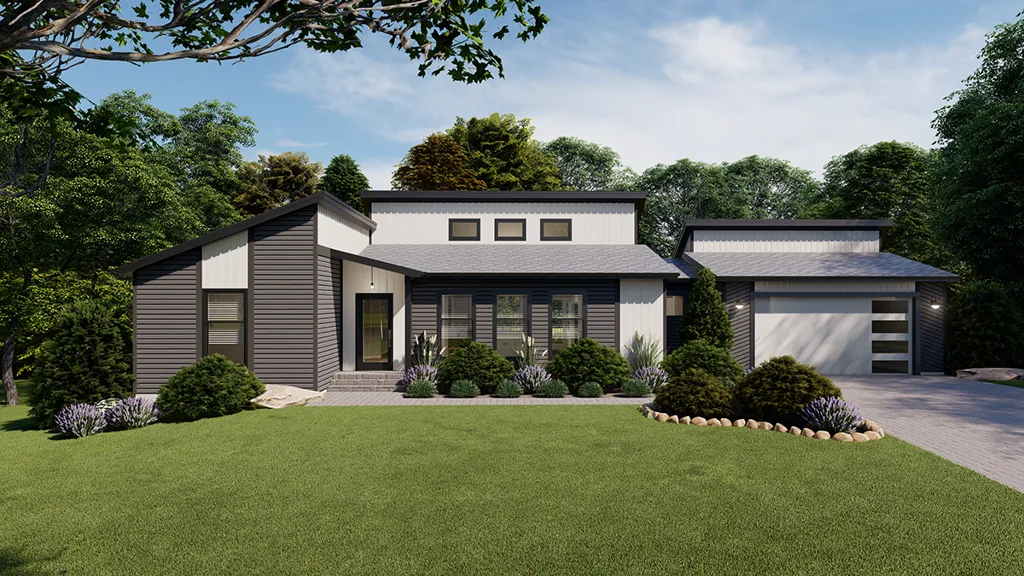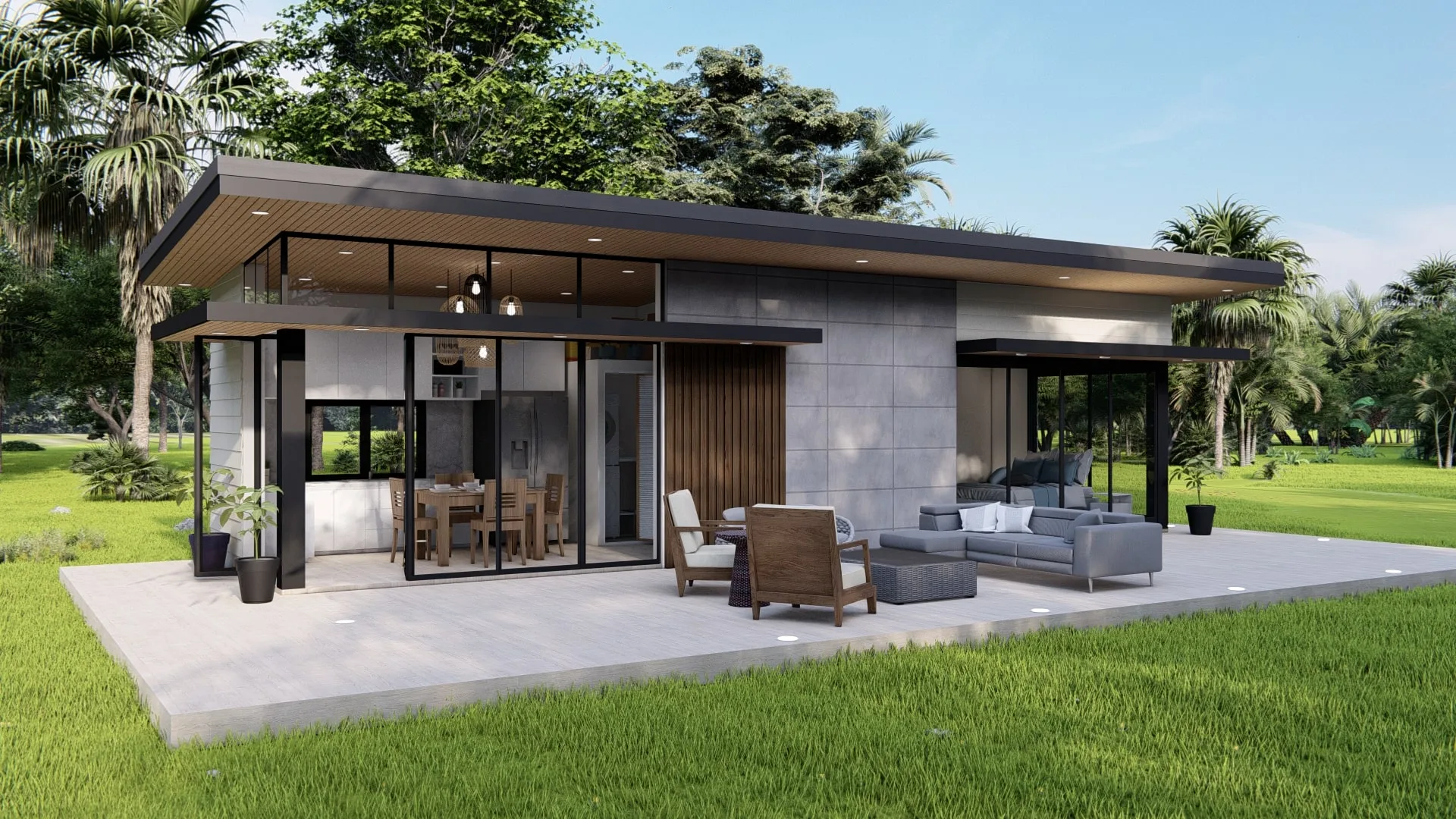
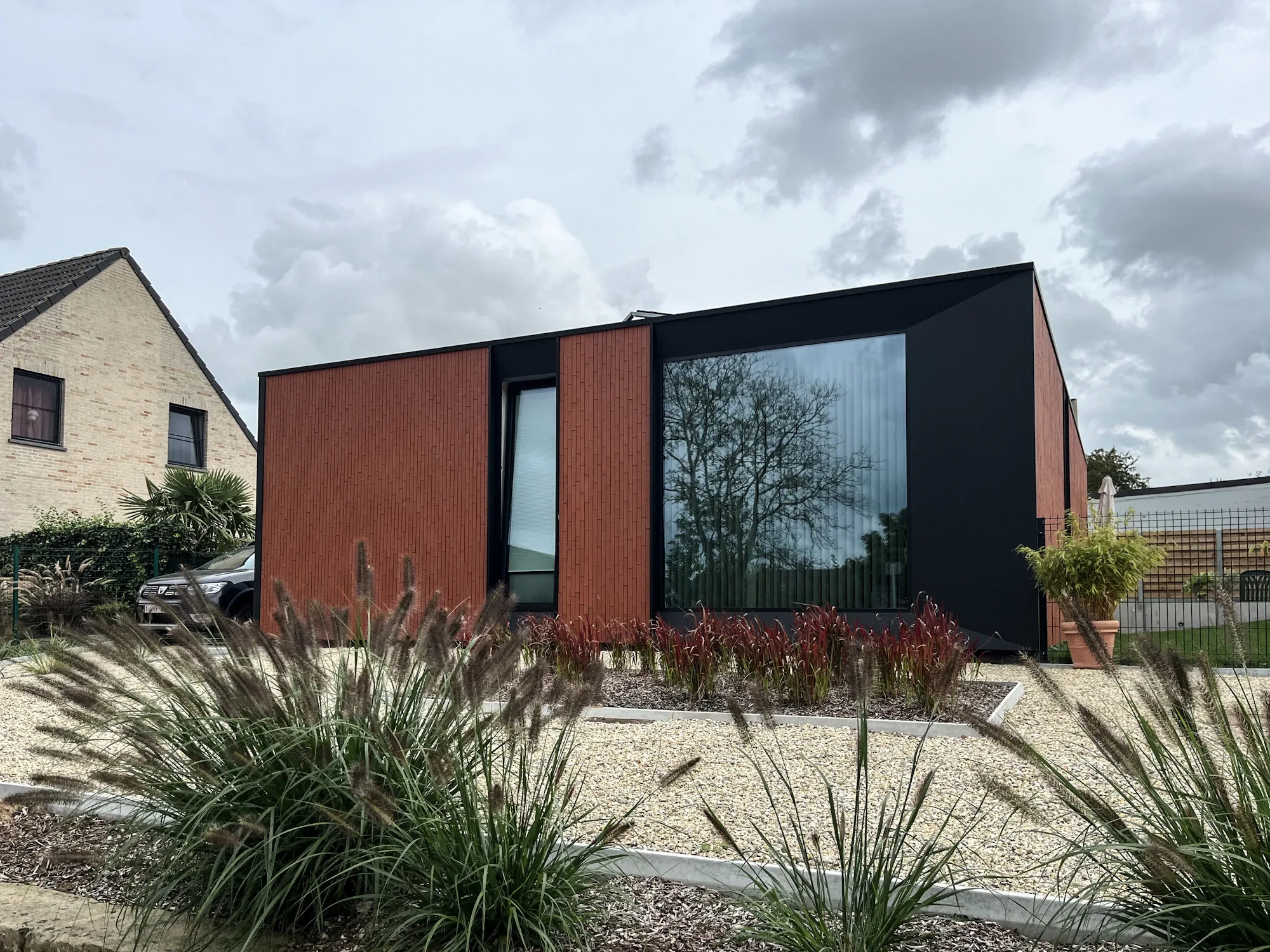
Belgium has a varied modular housing industry. Buyers can find complete factory-built family homes, concrete modules, timber-frame extensions, compact cabins and cross-laminated timber systems for larger developments.
A modular home is produced as three-dimensional sections inside a factory. The modules are transported to the plot and connected to create the completed building. Depending on the system, they may arrive with windows, flooring, building services, kitchens and bathrooms already installed.
Some Belgian manufacturers use panelised construction instead. In this method, walls, floors and roof sections are factory-made but assembled into the building on the plot. This guide identifies the difference so buyers can compare the companies accurately.
Understanding Belgium’s modular home market
Belgium has several manufacturers producing genuine room-sized modules. Skilpod, Modulart, Noust, HomeQue and Ark-Shelter all describe systems in which substantial three-dimensional sections are completed indoors before transportation.
Other companies work with highly prefabricated timber or cross-laminated timber, commonly shortened to CLT. CLT is made by bonding layers of timber in alternating directions to create large structural boards. These boards may form complete modules or arrive as flat wall, floor and roof components.
This means the companies below are not directly interchangeable. A compact Ark-Shelter cabin serves a different market from a full concrete Modulart house or a CLT structure supplied by Stabilame.
How the manufacturers were selected
This shortlist concentrates on companies that manufacture in Belgium, operate Belgian production facilities or have a clearly documented Belgian modular-home offer.
Each company has an active official website and enough published information to understand its building system, production process or residential applications.
“Top” means notable manufacturers that buyers may reasonably investigate. It does not mean every company is suitable for every plot or that the manufacturers have been ranked from best to worst.
10 top modular home manufacturers in Belgium
1. Skilpod
Skilpod manufactures complete timber-frame modular homes at its workshop in Geel. Its Belgian range covers permanent homes with two to four bedrooms, including detached and semi-detached configurations.
The company produces three-dimensional modules for private homeowners, housing organisations, public authorities and developers. Its professional system also supports apartments and larger residential projects.
Skilpod’s private homes are delivered on a turnkey basis. The published scope includes flooring, kitchens, bathrooms and painting, while the company can also coordinate utility connections and required inspections.
This is one of the clearest options for buyers seeking a conventional permanent family home rather than a tiny house or temporary unit. Skilpod builds across Belgium and also serves the southern Netherlands.
2. ModuleHome
ModuleHome produces custom timber-frame modules and prefabricated residential units. The company operates a 25,000-square-metre automated production facility in Tubize containing six industrial robots.
Its documented applications include detached houses, apartments, assisted-living units, holiday modules, home extensions, rooftop additions and offices.
Buyers can commission a custom project or begin with one of the manufacturer’s standard designs. Available completion levels include structural-shell, comfort and individually specified packages.
ModuleHome manages design, construction, transport and installation. This makes it relevant to private homeowners requiring a complete house, as well as buyers planning an extension, care unit or small residential development.
3. Modulart
Modulart manufactures reinforced-concrete modular houses at its facility in Tubize. The Belgian construction company was established in 2004 and serves private buyers, developers, businesses and public organisations.
Its modules are produced indoors and transported to the plot for assembly. Buyers can select from a large catalogue of house layouts and then adjust the room arrangement, external appearance, kitchen, bathroom and other finishes.
The company’s system can be used for detached houses, apartments, offices, schools and childcare buildings. Modulart can also provide administrative and technical coordination, including work connected with surveys, structural engineering and planning applications.
Modulart is particularly relevant to buyers who prefer concrete construction but still want substantial factory production and a model-based design process.
4. Noust
Noust manufactures customised timber-frame housing modules in its production hall in Lommel.
Unlike catalogue-based companies, Noust begins each project with the buyer’s requirements. The house is developed as a three-dimensional plan before the individual modules are assembled and fitted with technical systems inside the factory.
The foundations can be prepared while factory production continues. The finished sections are then transported to the plot and joined to form the home. Additional modules may also be considered when a household needs more space later.
Noust is a relevant choice for a buyer who wants the speed and controlled production of modular construction but does not want to choose from a fixed collection of standard plans.
5. HomeQue
HomeQue creates modular homes from CLT sections called Qubes. Individual Qubes are combined to form a house adapted to the buyer’s required size and layout.
The modules are produced mainly inside the company’s production hall and transported to the site for assembly. HomeQue states that on-site installation generally takes only several days after factory production has been completed.
Its applications include new houses, extensions, care accommodation, pool houses and additional floors placed on existing buildings. The company’s standard technical concept also incorporates systems such as a heat pump and solar panels.
HomeQue is suitable for buyers interested in solid-timber construction and a modular layout that can be configured around different plots and household requirements.
6. STiDO
STiDO specialises in modular timber-frame construction. Its offer includes compact new homes, care units, mobile outbuildings and extensions connected to an existing property.
The company’s modules are prefabricated in its own workshops and transported to the site for turnkey installation. Projects are customised rather than restricted to one standard external design.
STiDO may be particularly useful when the buyer needs a smaller permanent residence, an independent home for a family member or extra living and working space beside an existing house.
Its published offer is more focused on compact buildings and extensions than the larger multi-bedroom family houses offered by Skilpod or Modulart.
7. Ark-Shelter
Ark-Shelter manufactures fully finished, one-piece timber units for living, working, care and hospitality uses.
The units are built inside a factory before being transported to the destination. Ark-Shelter states that a completed building can be positioned and connected in one working day, limiting the amount of construction activity on the site.
One unit can operate independently, while several Arks can be placed together or connected to create a larger building. Available applications include compact homes, home offices, care accommodation, rental cabins and groups of tourism units.
Ark-Shelter is most relevant to buyers seeking a compact design-led home, nature cabin or accommodation project. It is less directly comparable with a conventional three- or four-bedroom family house.
8. Halzebatz
Halzebatz develops fixed and mobile modular buildings from CLT. The company’s modules are factory assembled and can be equipped with electrical systems, plumbing and internal finishes before delivery.
Its range includes compact homes, larger modular houses, offices and other small buildings. Several modules can be placed side by side or stacked, depending on the structural design and intended use.
Halzebatz is headquartered in Luxembourg, but it states that its compact homes are manufactured in Belgium. Its timber and workshops are sourced within the wider region around Belgium, Luxembourg, Germany and France.
This supplier is particularly relevant for compact housing, holiday accommodation and projects requiring individually designed CLT modules. Buyers should confirm the contractual manufacturer and exact production location for the selected building.
9. Wood Innovation
Wood Innovation is a Belgian manufacturer of prefabricated CLT components based in Amel.
The company produces solid-timber components for houses, commercial buildings, additional floors and modular or temporary structures. Its system can therefore support residential projects, tourism accommodation and larger professional developments.
Wood Innovation mainly manufactures structural building elements rather than selling a broad catalogue of finished room-sized homes directly to consumers. The CLT walls, floors and roof sections are produced in advance and assembled into the building.
It is most relevant to architects, developers, construction partners and private buyers working with a professional team on a customised timber project. Buyers seeking a simple turnkey catalogue home may find other manufacturers on this list easier to compare.
10. Stabilame
Stabilame is a Belgian manufacturer of timber houses and engineered structural components. The company has produced wooden homes since 1989 and began manufacturing nailed CLT in 2007.
In 2017, Stabilame invested in two production lines for glued CLT. It operates its own design and engineering department and manufactures structural components for individual houses and larger timber buildings.
Its construction method is primarily panelised. Large CLT walls and floors are manufactured and machined in the factory, organised for transportation and assembled on the building site.
Stabilame is worth considering when the buyer wants a custom solid-timber house made by an established Belgian producer. It is not a volumetric manufacturer in the same sense as Skilpod, Modulart or Ark-Shelter.
Which Belgian manufacturer may fit your project?
For a full-sized private family home, start by comparing Skilpod, ModuleHome, Modulart, Noust and HomeQue.
Skilpod provides a standardised range of turnkey timber homes. ModuleHome and Noust offer greater customisation, while HomeQue uses configurable CLT Qubes. Modulart is the clearest option in the shortlist for buyers specifically interested in reinforced-concrete modules.
For a compact home, extension or care unit, STiDO, Ark-Shelter and Halzebatz have particularly relevant systems.
STiDO focuses on compact timber-frame buildings and extensions. Ark-Shelter produces finished one-piece cabins, while Halzebatz offers compact CLT units that may be fixed, mobile or combined into larger arrangements.
For a design developed with an architect or professional construction team, Wood Innovation and Stabilame provide Belgian-made CLT systems. These companies should be compared as structural manufacturers rather than sellers of standard finished modular houses.
What to check before requesting a quote
Begin by asking what will physically arrive on the plot. The delivery may consist of:
Complete three-dimensional rooms.
A finished one-piece cabin.
Reinforced-concrete modules.
Timber-frame housing sections.
Flat CLT walls, floors and roof panels.
A structural shell requiring substantial work on site.
Send the same project brief to every shortlisted manufacturer. Include the plot address, required floor area, number of bedrooms, intended use, preferred materials and expected level of completion.
Ask the company to separate its quotation into factory production, design work, foundations, transportation, crane installation, module connections, heating, ventilation, utility connections and external works.
The word turnkey does not always cover the same items. A quotation may still exclude excavation, difficult foundations, utility connections, retaining walls, landscaping, municipal charges or professional fees.
Access should be checked before the final house design is approved. Large modules require suitable roads, turning space, overhead clearance and enough room for a crane. Panelised systems may be easier to transport but can require more work on the site.
Planning requirements depend on the Belgian region and the municipality. New houses in Flanders require an environmental permit, and the official guidance advises applicants to consult both an architect and the municipality. Wallonia requires an urban-planning permit for new buildings and fixed installations, including some structures that can technically be dismantled or moved. Brussels operates its own regional permit system. Factory production does not remove these requirements.
Conclusion
Belgium has a credible selection of modular home manufacturers, but the companies use several different systems.
Skilpod, ModuleHome, Modulart, Noust and HomeQue provide the most directly comparable routes to complete permanent houses. STiDO, Ark-Shelter and Halzebatz are particularly relevant for compact homes, extensions and tourism accommodation.
Wood Innovation and Stabilame serve the wider prefabricated-timber market with factory-made CLT components rather than standard finished room modules.
The most useful comparison is not simply between company names. Buyers should compare the construction system, factory completion level, delivery scope, site responsibilities and work excluded from the quotation.
PrefabFind helps buyers discover modular home manufacturers in Belgium and compare different construction systems before requesting detailed proposals.