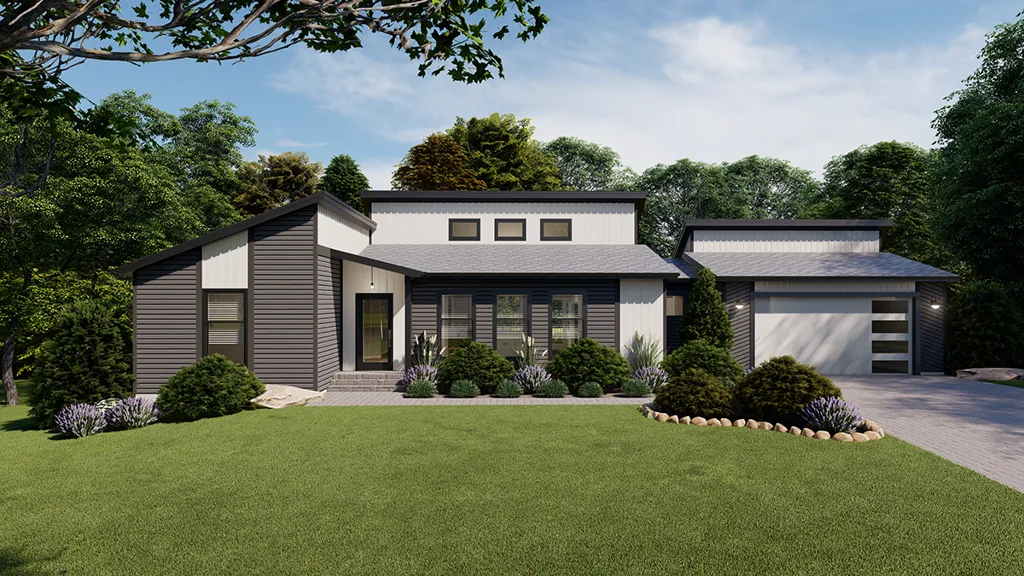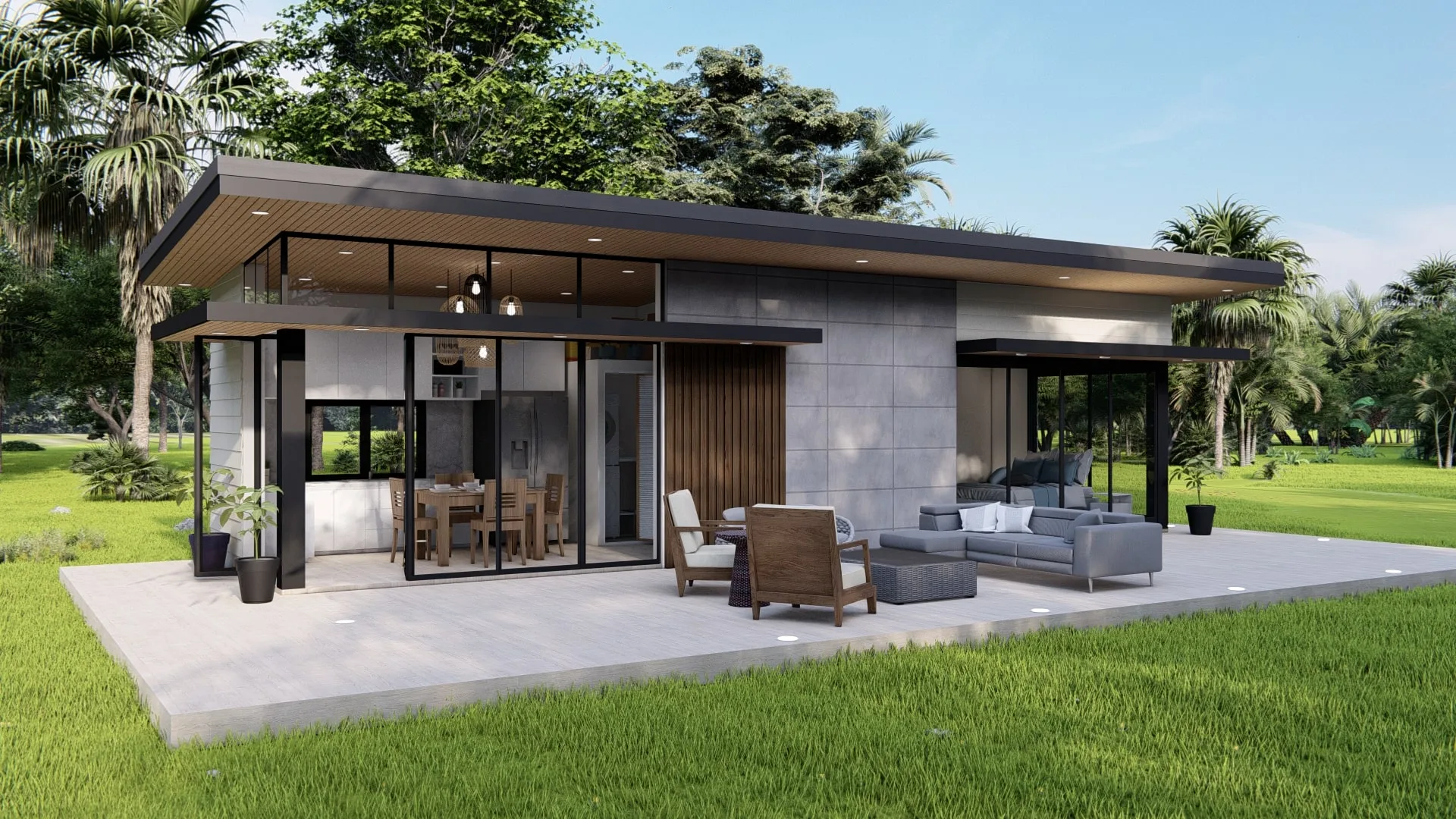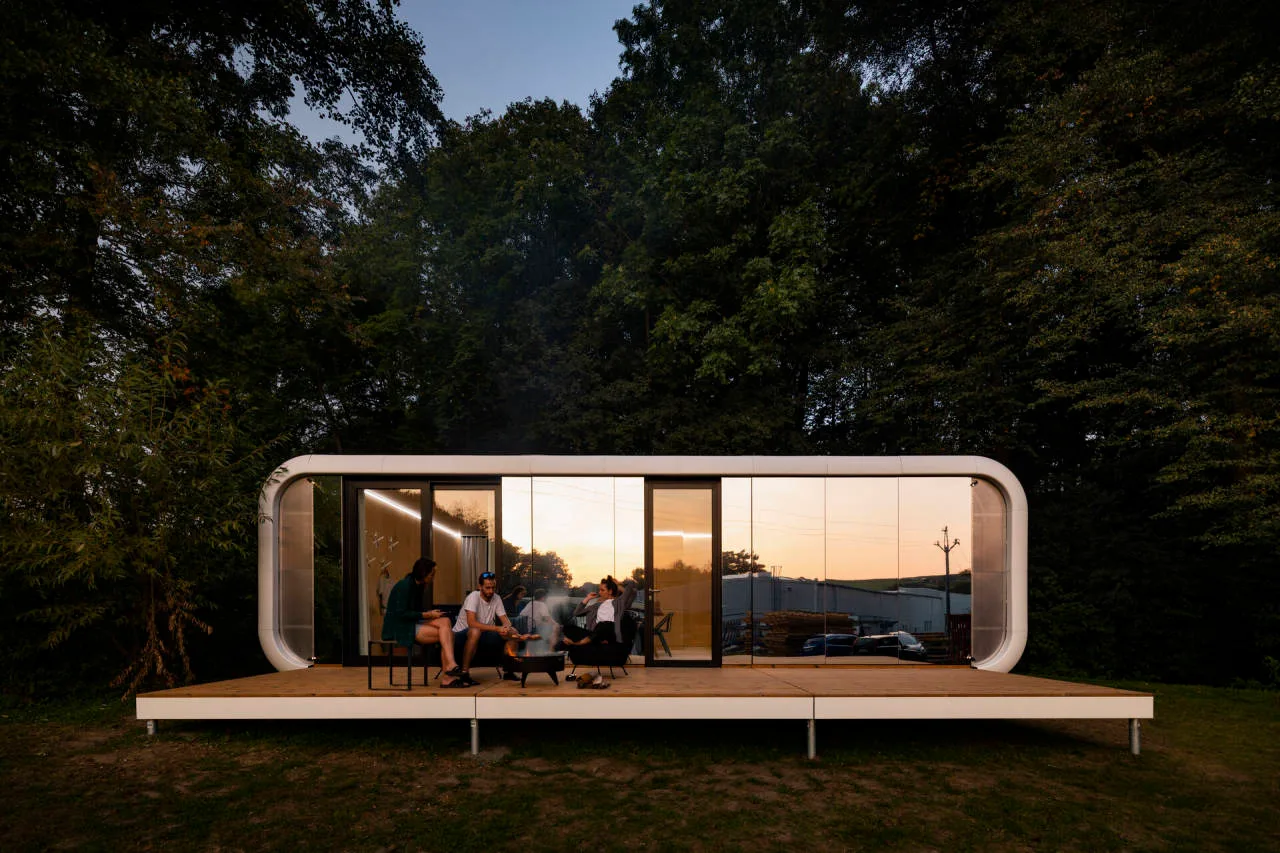

China has one of the world’s broadest selections of factory-produced housing. Its modular home manufacturers supply everything from compact cabins and expandable container homes to hotels, apartment buildings and multi-storey residential projects.
A modular home is built from factory-made sections before being delivered to the construction site. In volumetric modular construction, each section is a three-dimensional room or part of a room, often with windows, wiring, plumbing and interior finishes already installed.
Other Chinese suppliers sell flat-pack, panelised or light-steel systems. These arrive as frames, walls or folded sections that require more assembly after delivery.
Understanding this difference is essential. A finished room-sized module cannot be compared directly with a low-cost container kit or a panelised steel villa.
Understanding China’s modular home market
Chinese manufacturers generally serve one of three markets.
The first group produces permanent volumetric buildings for developers, hotel operators, universities and public housing organisations. CIMC Modular Building Systems, BROAD Holon and GS Modular are among the clearest examples.
The second group supplies compact factory-finished homes for private buyers, resorts and tourism businesses. YAHGEE, PTH House, DeepBlue Smarthouse and WELLCAMP publish products in this category.
The third group concentrates on flat-pack container buildings, workforce accommodation and emergency housing. These systems may also be adapted into private homes, but their original design priorities can differ from those of a permanent family residence.
This shortlist includes manufacturers from all three groups because international buyers approach China with very different project requirements.
How the manufacturers were selected
The manufacturers were selected because they:
Operate manufacturing facilities in China.
Publish a clear modular or factory-built residential offer.
Explain their structural or production system.
Show completed projects, product ranges or production facilities.
Serve international customers or publish export-oriented services.
Had active official websites when this article was researched.
“Top” means notable manufacturers worth investigating. It does not mean that every company is suitable for an individual homeowner or that all products can be approved in every destination country.
10 top modular home manufacturers in China
1. CIMC Modular Building Systems
CIMC Modular Building Systems is a Shenzhen-based specialist in permanent off-site construction. Its project portfolio includes apartments, public housing, student residences, hotels, offices and healthcare buildings.
The company uses steel volumetric modules. Complete room-sized sections are manufactured and fitted out before being transported to the destination and stacked into the final building.
CIMC has delivered modular residential projects in China and overseas. Its documented work includes the InnoCell apartment development and transitional housing projects in Hong Kong, as well as hotels and student accommodation in Europe and North America.
This manufacturer is most relevant to property developers, hotel groups, housing organisations and institutional buyers. It is not primarily positioned as a catalogue-home brand for someone ordering one small detached house.
2. BROAD Holon
BROAD Group develops the Holon factory-built construction system from its base in Changsha.
Holon buildings use a stainless-steel structural material called B-CORE. The system is based on foldable, transport-sized building sections that are produced in a factory before being opened and connected at the destination.
BROAD presents Holon as a system for apartment buildings, hotels and other multi-storey developments. It has also demonstrated smaller residential buildings, including its factory-made Home Garden project.
The company’s system is considerably different from a conventional container house. It is intended as a complete industrialised building platform, with the structure, insulation and building systems designed together.
BROAD is most relevant to governments, developers and large construction partners. A private buyer considering a single residence would need to establish whether an authorised regional partner can deliver an appropriately scaled project.
3. YAHGEE Modular Building
YAHGEE was established in 2001 and operates modular production facilities in China. The business forms part of China Nanshan Development Group’s integrated-building activities.
Its residential range includes SkyPod, a compact modular-home series introduced in 2024. The published configurations are below 60 square metres and include one- and two-bedroom arrangements.
YAHGEE states that SkyPod reaches a factory-prefabrication level of 99%. The units are delivered with interior facilities and finishes already installed, making the series more comparable with a completed compact home than with a basic flat-pack container.
The wider company also produces accommodation, commercial and institutional modular buildings.
YAHGEE is worth comparing for compact residences, holiday accommodation, staff housing and tourism projects where a high level of factory completion is required.
4. GS Housing and GS Modular
GS Housing was registered in 2001 and manufactures flat-pack containers, folding houses, portable cabins and other modular buildings.
The group reports six modular-building production bases with a combined annual capacity exceeding 200,000 modular units. Its traditional market includes construction camps, emergency buildings, commercial facilities and large accommodation projects.
Its GS Modular subsidiary concentrates on permanent volumetric construction. These buildings can have the structure, interior finishes, mechanical and electrical systems and other equipment installed inside the factory.
The distinction between the two product groups is important. A GS Housing flat-pack container is not the same product as a permanent GS Modular apartment or hotel system.
The group is particularly relevant for repeat orders, workforce accommodation, hotels, urban housing and large international projects.
5. PTH House
PTH House is the international brand of Zhejiang Putian Integrated Housing. The company supplies tiny homes, flat-pack container buildings, light-gauge steel structures and other prefabricated housing systems.
Light-gauge steel uses thin, cold-formed steel sections to create the walls, floors and roof structure. These components are generally shipped flat and assembled at the destination rather than delivered as complete rooms.
PTH also markets foldable and flat-pack homes that are more highly standardised. Its flat-pack container range can be configured for temporary or permanent space and supplied with different internal equipment.
The company’s offer is broad, so buyers should identify exactly which system is being quoted. A tiny house, light-steel villa and flat-pack container require different foundations, transport arrangements and levels of on-site work.
PTH is particularly relevant to compact-home buyers, distributors, developers and tourism operators looking for an export-oriented supplier.
6. DeepBlue Smarthouse
Ningbo DeepBlue Smarthouse produces light-steel prefabricated houses and volumetric modular buildings.
Its wider catalogue includes single-family houses, townhouses, granny flats, cabins, tiny homes, accessory dwelling units and hotel accommodation. Buyers can therefore compare panelised light-steel construction with complete volumetric units through one manufacturer.
DeepBlue describes its volumetric system as a hot-rolled steel structure with reinforced-concrete floors. These modules leave the factory nearly completed and can contain substantial interior work before delivery.
Its published modular range includes compact accommodation units of about 30 square metres and larger connected buildings. The company accepts enquiries from private buyers, builders, developers and investors.
DeepBlue is relevant to buyers seeking a completed cabin or hotel module, but also to developers who need light-steel wall, floor and roof systems for larger residential projects.
7. Chengdong Modular House
Chengdong Modular House, commonly presented internationally as CDPH, manufactures container modules, prefab houses, cold-climate accommodation and light-steel villas.
The company reports a factory area of 128,000 square metres, an annual production capacity of 85,000 units and projects covering more than 100 countries.
Its main modular product uses welded steel container frames connected with bolts. Units can be used independently, combined horizontally or stacked to create buildings of up to three levels.
Chengdong also offers light-steel villas and highly prefabricated panel buildings. These products are more suitable for semi-permanent residential use than its basic camp modules.
The company’s strongest documented market is large accommodation and infrastructure projects. It is most relevant for worker housing, emergency accommodation, remote projects and bulk residential orders rather than one highly customised private home.
8. Lida Group
Lida Group was founded in 1993 and is based in Shandong. Its products include modular houses, container buildings, affordable housing, steel structures and light-steel villas.
The company states that its projects had reached 152 countries and regions by 2025. Its international activity includes large camps, infrastructure accommodation and prefabricated steel-building projects.
For residential buyers, the most relevant products are its light-steel villas, expandable container houses and affordable housing systems. The villas use factory-made steel framing and can be designed as residential buildings of up to three floors.
Lida also supplies standard container units that can be joined to create apartments, shops, hotels and accommodation buildings.
The manufacturer is most suitable for larger residential orders, tourism developments, affordable-housing programmes and buyers who need one supplier to coordinate several building types.
9. K-Home
Henan K-Home Steel Structure was established in 2007 and operates a manufacturing site in Xinxiang, Henan.
Its product range includes detachable, flat-pack, folding and expandable container houses. The company also publishes permanent metal homes, concrete passive-house products, apple cabins and light-steel prefab buildings.
Most of K-Home’s documented modular projects serve construction camps, accommodation facilities, schools, offices and emergency uses. Units can be supplied with bathrooms, kitchens, electrical systems and interior finishes according to the project.
Its container modules can be combined horizontally or vertically, while its permanent-house category provides a different route for buyers who need longer-term residential construction.
K-Home is most relevant for affordable accommodation, remote housing, compact cabins and projects that require repeatable units. Private buyers should avoid assuming that a standard camp module automatically has the specification required for permanent residential approval.
10. WELLCAMP
Guangdong WELLCAMP Steel Structure & Modular Housing manufactures container houses, folding buildings, expandable homes and prefabricated villas.
The company reports more than 19 years of export and production experience, sales to more than 60 countries and a production base exceeding 40,000 square metres.
Its expandable range includes compact units of approximately 10 to 40 square metres. WELLCAMP also supplies detachable containers, flat-pack buildings, mountain cabins and light-steel villas for family, holiday and resort use.
A key part of its business remains camps and temporary accommodation. Buyers should therefore confirm whether a selected model is designed as a permanent residence, a relocatable building or short-term accommodation.
WELLCAMP is particularly relevant for compact tourism units, affordable housing, workforce accommodation and projects where shipping efficiency is more important than creating a highly individual house.
Which Chinese manufacturer may fit your project?
For a multi-storey apartment, hotel or student-housing development, begin with CIMC Modular Building Systems, BROAD Holon, GS Modular and YAHGEE.
CIMC has the strongest documented international portfolio of permanent steel volumetric buildings. BROAD offers a distinctive stainless-steel construction system, while GS Modular provides permanent building modules alongside the wider GS Housing product range. YAHGEE combines large-project capability with a clearly defined compact residential product.
For a private compact home or tourism cabin, compare YAHGEE SkyPod, PTH House, DeepBlue Smarthouse and WELLCAMP.
DeepBlue offers both completed volumetric cabins and larger light-steel homes. PTH has a broad range of tiny, foldable and panelised products. WELLCAMP focuses more heavily on expandable and transport-efficient accommodation.
For affordable housing, camps or repeat accommodation, GS Housing, Chengdong, Lida Group, K-Home and WELLCAMP have the most directly relevant production systems.
These companies generally work best when the buyer needs several standardised units. A one-off private house may require more custom design, local engineering and site work than their standard quotations include.
What to check before importing a modular home
Confirm the construction type
Ask the manufacturer to state exactly what is being supplied:
A complete three-dimensional module.
An expandable or folding house.
A flat-pack container.
Light-steel wall and roof panels.
A structural frame and material kit.
A completed cabin with fitted services.
A multi-module permanent building.
Request drawings showing every transport section and the points where sections will be connected.
Check the destination requirements first
Send the proposed drawings and specifications to a qualified professional in the destination country before paying a substantial deposit.
The house may need to be adapted for local wind, snow, earthquake, fire, insulation, accessibility and energy requirements. The required specification can change even between regions of the same country.
Ask the local professional which calculations, drawings, material records and test reports must be supplied by the factory.
Compare the complete delivered scope
A low factory quotation may exclude many essential items. Ask whether the offer includes:
Structural design and calculations.
Interior and exterior finishes.
Windows and external doors.
Electrical wiring and distribution board.
Plumbing and sanitary equipment.
Heating, cooling and ventilation.
Kitchen furniture and appliances.
Factory testing and inspection.
Packaging and transport.
Cargo insurance.
Import duties and taxes.
Crane installation.
Foundations.
Utility connections.
Local finishing work.
Do not compare a factory-only price with an installed building quotation.
Verify materials and performance
Request a project-specific technical specification rather than relying only on a general brochure.
Check the structural steel grade, corrosion treatment, wall construction, insulation thickness, window performance, roof drainage and interior materials.
Electrical voltage, plug types, plumbing connections and heating equipment must also suit the destination country.
Ask the factory to identify exactly which certificates and test reports apply to your specific building components. Have your local project professional confirm whether those documents are sufficient.
Inspect before shipment
For a larger order, consider an independent factory inspection at key production stages.
The inspection can record structural components before they are covered, check installed equipment and compare the finished modules with the approved drawings.
Request photographs, serial numbers and inspection reports for each module. Agree on how defects identified before shipment will be corrected.
Plan transport and installation early
Complete modules can be much wider and taller than standard shipping containers. Their route from the port to the plot may require special transport arrangements.
Check road width, bridge limits, overhead cables, turning space and crane access before production begins.
Flat-pack systems are easier to ship, but they normally require more labour, tools and weather protection during assembly.
Clarify the warranty
The contract should identify the legal seller, manufacturing company and party responsible for installation.
Ask what happens when a damaged component or replacement part is needed after delivery. Confirm who pays for transport, local labour and access equipment during a warranty repair.
For international orders, the practical ability to obtain repairs can be as important as the written duration of the warranty.
Conclusion
China offers modular home manufacturers for almost every project scale, but their products are not directly comparable.
CIMC, BROAD and GS Modular specialise in permanent multi-storey construction. YAHGEE and DeepBlue provide some of the clearest options for highly finished residential modules.
PTH, Chengdong, Lida, K-Home and WELLCAMP offer broad ranges of light-steel, container and expandable buildings, particularly for tourism, affordable housing and repeat accommodation.
The factory price should not be the main selection criterion. Buyers need to compare structural design, destination-country requirements, shipping, installation, factory completion and after-sales responsibility.
PrefabFind helps buyers explore modular home manufacturers in China and compare the different construction systems before requesting detailed proposals.