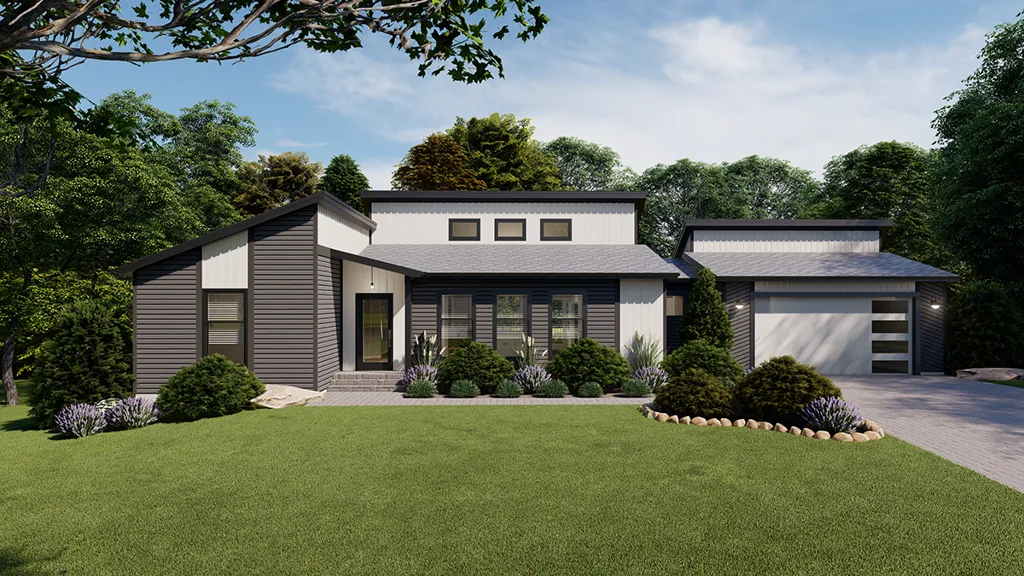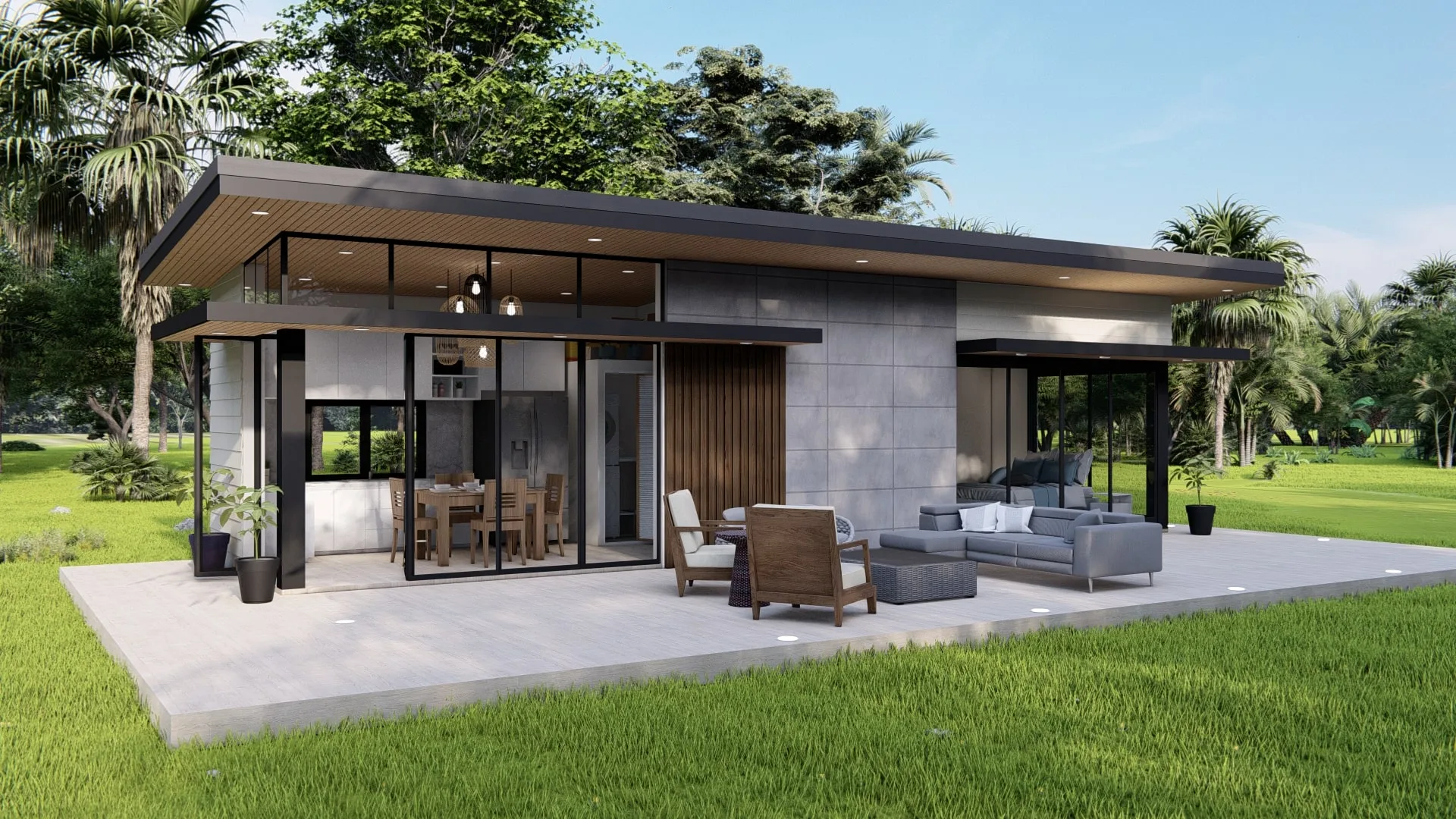
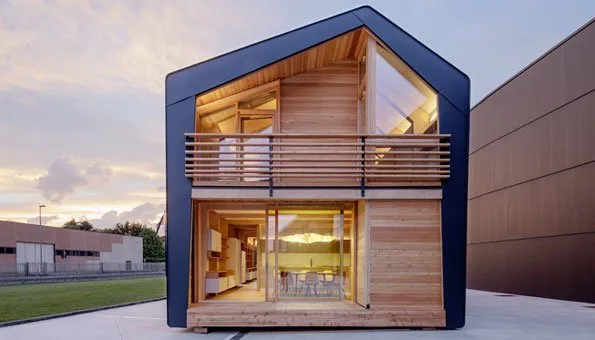
Italy’s factory-built housing market covers several construction methods. Buyers can find foldable timber homes, compact accommodation modules, custom steel houses and complete family homes produced from prefabricated wall systems.
A modular home is normally made from factory-produced sections that are transported and connected on the building site. In volumetric construction, these sections are three-dimensional units containing complete rooms or parts of rooms.
A panelised home is different. Its walls, floors and roof elements are manufactured indoors but assembled into the finished building on the plot.
Both methods can reduce outdoor construction work, but they involve different transport, installation and finishing requirements. This guide introduces ten notable manufacturers and explains which system each one uses.
Understanding Italy’s modular home market
Only some Italian manufacturers offer true volumetric or transportable modular homes.
Leap Factory, A-FOLD and MODOM have clearly documented modular systems. Marlegno manufactures compact timber accommodation modules through its Nidoom range. Other companies in this guide specialise in highly prefabricated houses made from timber, concrete or steel panels.
This distinction matters when comparing quotations.
A three-dimensional module may leave the factory with plumbing, electrical systems and internal finishes already installed. A panelised house can still have factory-fitted windows, insulation and services, but more assembly takes place on the building site.
The manufacturers also serve different customers. Some focus on private family homes, while others are more suitable for resorts, glamping operators, developers or architects planning customised buildings.
How the manufacturers were selected
This is an editorial shortlist rather than a ranking based on company turnover or number of houses sold.
The companies were selected because they manufacture in Italy, publish an identifiable residential or accommodation system and provide enough technical information to understand how their buildings are produced.
Preference was given to manufacturers with completed projects, an active official website and a defined factory-production process.
“Top” therefore means notable companies worth investigating. It does not mean that every manufacturer will be suitable for every plot, budget or type of home.
10 top modular home manufacturers in Italy
1. Leap Factory
Leap Factory produces modular buildings entirely in Italy for residential, hospitality, research and remote-site uses.
The company’s residential range includes LeapHome systems for private buyers, architects and property developers. Its modules and components are manufactured in Italy and shipped to the final location for assembly and finishing. Leap states that plumbing, electricity, heating and cooling systems can already be integrated into the building package.
Leap’s system is designed around transportable components. The company says the parts required for an average 120-square-metre home can fit inside two shipping containers, although the exact transport arrangement depends on the model and destination. Its project service can include engineering, manufacturing, shipping, installation and completion.
Leap Factory is relevant to buyers seeking a contemporary modular home, a remote retreat or repeatable accommodation for a professional development.
2. A-FOLD
A-FOLD designs and manufactures foldable timber modular houses in Città Sant’Angelo in the province of Pescara.
Its patented system allows sections of the house to be folded for transportation and opened at the destination. The company describes its products as entirely designed and produced in Italy.
The range covers residential buildings, second homes, tourism accommodation and glamping units. Its Model A collection is commonly used for holiday properties and resorts, while buyers can select finishes and equipment packages according to the intended use.
A-FOLD is one of the clearest Italian options for buyers who specifically want a transportable modular timber building rather than a conventional panelised house.
3. MODOM
MODOM develops modular timber architecture for residential, tourism, wellness and business applications.
Its LivingPlus range is intended for housing and smart-home projects. Buyers can configure the layout, roof shape, materials, internal finishes and building systems with support from the company’s design team.
MODOM’s system is built around prefabricated multilayer timber panels. The panels are designed for floors, walls and ceilings and contain spaces for technical installations. Buildings can be expanded by adding sections or, where technically and legally possible, dismantled and reconstructed elsewhere.
Because MODOM uses modular panels rather than always transporting complete finished rooms, buyers should ask how much assembly and interior work will occur on their plot.
4. Marlegno
Marlegno is an Italian timber-construction company producing custom houses, residential developments and modular accommodation systems.
Its clearest volumetric product is Nidoom, a prefabricated timber living module designed mainly for hospitality and tourism. Nidoom units can be customised internally and externally and are suitable for applications such as hotel rooms, eco-suites, campsites and glamping developments.
Marlegno also builds permanent family homes using factory-produced timber walls and other prefabricated elements. These houses are panelised rather than transported as complete three-dimensional rooms.
The company has also completed larger residential developments, including the Borgo del Sole project, which contains 120 timber housing units.
Marlegno is therefore relevant to both individual homeowners and professional buyers planning modular tourism accommodation or repeat residential projects.
5. Moretti MORE
Moretti MORE designs and builds customised prefabricated houses using industrially produced concrete and timber components.
Its patented construction method is based on technological modules manufactured from concrete or wood. The external layer of its concrete-based wall panel uses a concrete material developed with Italcementi, while insulation and building services are integrated around the wider house design.
MORE’s houses are individually designed rather than selected only from a fixed catalogue. The company manages the building as a complete project and publishes finished contemporary villas and detached homes.
This is an industrialised panel-and-component system rather than conventional volumetric modular construction. It may suit buyers seeking a substantial permanent house with concrete surfaces and a high level of design personalisation.
6. Steelhome
Steelhome produces prefabricated residential buildings from its base in Altivole, in the province of Treviso.
The company offers two main systems. SteelConcrete combines a steel load-bearing frame with prefabricated reinforced-concrete wall sections and external insulation. SteelWood combines a steel structure with timber infill panels.
Structural profiles and panels are produced and preassembled before being transported to the construction site. Steelhome offers architectural design, advanced-shell and turnkey delivery routes, depending on the project.
The manufacturer reports more than 250 completed projects and publishes detached houses, extensions and multi-unit residential developments.
Steelhome is most relevant to buyers seeking a permanent steel or steel-and-concrete house. It is a panelised prefabricated system rather than a home delivered as complete rooms.
7. Wolf Haus
Wolf Haus manufactures customised timber-frame houses at its Italian production operation in South Tyrol.
The company is part of the international Wolf System group and states that Wolf Haus buildings have been completed throughout Italy. Its Italian operation has its own manufacturing facility rather than outsourcing the main prefabrication process.
Wolf Haus builds bespoke private residences rather than only offering fixed catalogue plans. Its wider group reports production of around 1,000 timber houses per year, although this figure covers the broader operation rather than only Italian residential deliveries.
The houses use factory-produced timber wall, floor and roof elements assembled on the plot. Wolf Haus should therefore be classified as a leading panelised timber-home manufacturer, not as a conventional volumetric modular company.
It is relevant to private buyers looking for a full-sized custom timber residence with an established Italian production and support structure.
8. Rubner Haus
Rubner Haus manufactures customised prefabricated timber homes at its facilities in Chienes, South Tyrol.
The company says it has produced more than 30,000 timber houses and has more than 60 years of housebuilding experience. It controls several parts of its supply chain, including timber processing and the production of prefabricated building elements.
Rubner produces wall components in its Alto Adige workshops before transporting them for assembly. Depending on the specification, walls can leave the factory with windows, doors, electrical installations, sanitary services and shading systems already included.
Buyers can choose different completion levels and develop an individual design with the company and their professional advisers.
Rubner Haus is suitable for buyers seeking an individually designed timber family home. Its method is highly prefabricated but primarily panelised.
9. Biohaus
Biohaus has produced prefabricated timber houses and villas since 1998.
The company focuses on customised residential buildings rather than compact transportable modules. Its service covers design-led timber homes, building systems and technical installations, with a particular emphasis on premium villas and individual interior specifications.
Biohaus offers different technical and finishing combinations through its house specifications. Its published projects show contemporary detached residences rather than a catalogue of standard room-sized modules.
Biohaus is therefore most relevant to buyers seeking a permanent, individually designed timber villa. Buyers specifically requiring volumetric construction should confirm whether any part of their proposed building will arrive as a complete room or only as prefabricated panels.
10. ILLE Haus
ILLE Haus manufactures customised timber homes at its production facility in Pieve di Bono-Prezzo, Trentino.
The company offers bespoke projects as well as house concepts that can be adapted to the buyer’s preferred design. Its services cover the process from preliminary design through production and building delivery.
ILLE’s offer includes private houses and other timber buildings produced through factory prefabrication. The company also supports external architects and designers who want to develop projects using its construction system.
Like Wolf Haus, Rubner and Biohaus, ILLE mainly uses factory-produced timber building elements rather than complete volumetric rooms.
It is worth comparing when a buyer wants a custom timber residence and values direct access to an Italian factory and showroom.
Which Italian manufacturer may fit your project?
For a genuine modular or transportable house, begin with Leap Factory, A-FOLD and MODOM.
Leap Factory uses container-compatible modular components for permanent homes and remote buildings. A-FOLD specialises in folding timber units that can be transported efficiently. MODOM offers expandable panel-based architecture for residential and smaller commercial uses.
For tourism accommodation, A-FOLD and Marlegno Nidoom have the most directly relevant products. A-FOLD publishes glamping and resort models, while Nidoom is designed as a factory-made timber eco-suite.
For a permanent concrete or steel-based house, compare Moretti MORE and Steelhome. MORE combines concrete and timber components in customised villas. Steelhome uses steel, concrete or timber wall systems that are prefabricated before site assembly.
For a full-sized timber family house, Wolf Haus, Rubner Haus, Biohaus and ILLE Haus are among the more established options in this shortlist.
These four companies primarily use panelised construction. They should be compared with one another based on design service, technical specification, completion level, delivery area and responsibility for work carried out on the plot.
What to check before requesting a quote
Start by asking the manufacturer to define its construction system in writing.
The building may arrive as:
Complete three-dimensional modules.
Foldable building sections.
Finished timber wall panels.
A steel frame with prefabricated wall elements.
Concrete-and-timber components.
A weather-tight structural shell requiring local completion.
Request drawings showing the transport sections and connection points. This will make it easier to understand how much of the building is completed in the factory.
Send the same brief to every shortlisted company. Include the plot address, required floor area, number of bedrooms, intended use, preferred construction material and required completion standard.
Ask each quotation to separate:
Architectural and engineering work.
Surveys and ground investigation.
Foundations and excavation.
Factory production.
Internal finishes.
Kitchen and bathroom equipment.
Heating, cooling and ventilation.
Transport and insurance.
Crane installation and assembly.
Water, drainage and electrical connections.
External stairs, terraces and landscaping.
Municipal charges and professional fees.
Work specifically excluded from the contract.
The meaning of “turnkey” can vary between manufacturers. A turnkey quotation may still exclude land preparation, utility connections, retaining walls, difficult foundations or external works.
Access also needs to be checked early. Complete modules and large panels may require wide roads, suitable turning space, overhead clearance and a safe area for a crane.
Factory construction does not remove normal Italian planning requirements. Under Italy’s national building framework, work classified as new construction is generally subject to a building permit. Regional rules, municipal plans, protected landscapes, seismic requirements and the details of the plot can create additional obligations.
A local architect, engineer or surveyor should confirm the applicable process before the buyer signs a manufacturing contract.
Conclusion
Italy has a varied factory-built housing sector, but not every prefabricated house is a true modular home.
Leap Factory and A-FOLD provide some of the clearest transportable modular systems. MODOM offers adaptable modular architecture, while Marlegno’s Nidoom range serves tourism and hospitality projects.
Moretti MORE and Steelhome provide industrialised alternatives based on concrete and steel. Wolf Haus, Rubner Haus, Biohaus and ILLE Haus focus on customised timber houses made from factory-produced building elements.
The right comparison should consider the construction method, delivery scope, transport requirements and amount of work remaining on the site—not only the appearance of the finished home.
PrefabFind helps buyers discover modular home manufacturers in Italy and compare different construction systems before requesting detailed proposals.