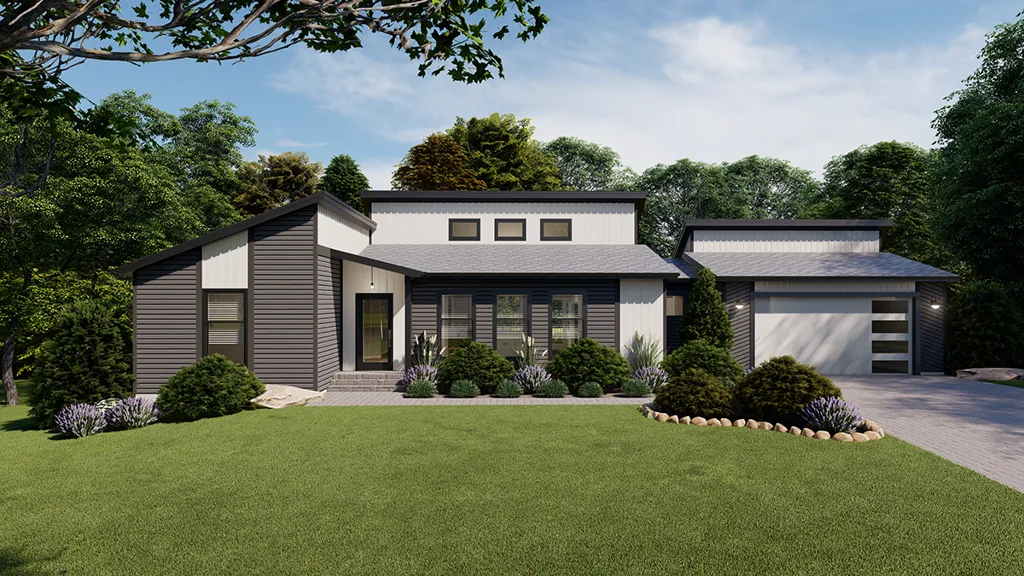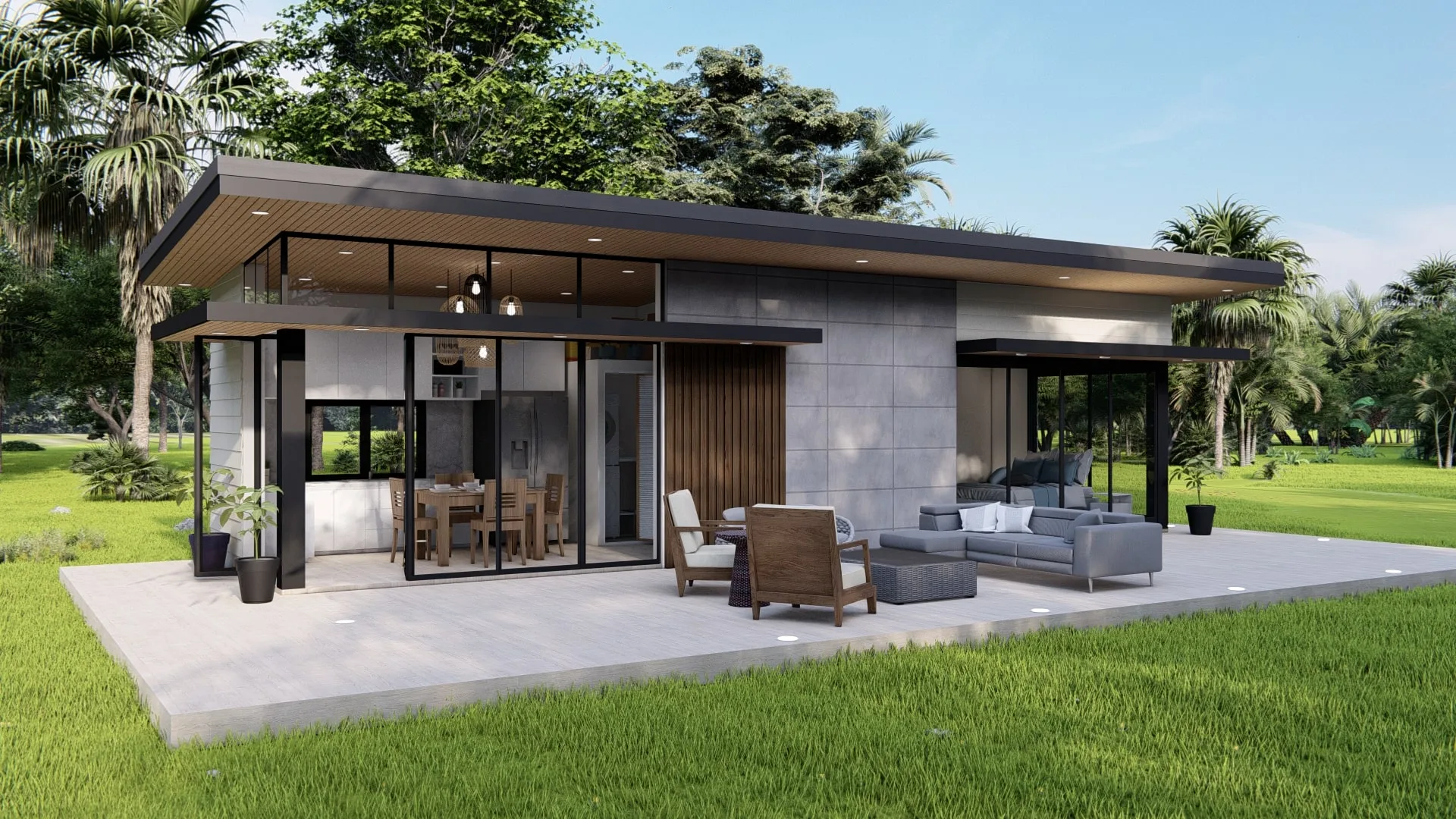
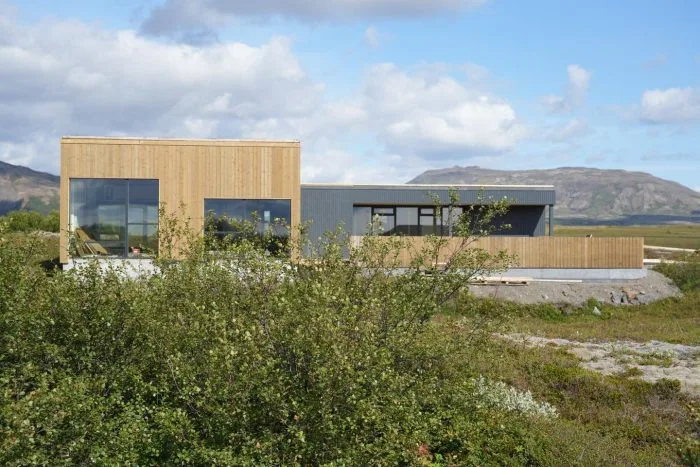
Iceland’s modular home market includes local construction companies, specialist importers and European factories with established delivery operations in the country.
A modular home is built partly or almost completely in a factory before it reaches the building plot. Some buildings arrive as complete three-dimensional sections containing finished rooms. Others use factory-made wall, floor and roof elements that require more assembly on site.
These construction methods should not be treated as identical. This guide explains what ten notable companies actually offer, helping buyers compare full-sized houses, holiday cabins and larger residential systems.
Understanding Iceland’s modular home market
Iceland does not have ten clearly documented domestic factories producing complete volumetric houses for private buyers. Based on the companies’ official descriptions, the market combines local manufacturing with imported modules, timber-frame elements and steel systems produced elsewhere in Europe. Icelandic companies often manage design coordination, transport, foundations and final installation.
A volumetric modular home arrives as one or more complete room-sized boxes. Kitchens, bathrooms, electrical work and flooring may already be fitted.
A panelised or element-built house arrives as separate factory-produced walls, floors and roof sections. This still reduces outdoor construction, but more work is completed after the components reach the plot.
The following selection includes both systems. It is an editorial shortlist based on documented Icelandic activity, product range and information available from official company sources. It is not a ranking by turnover, sales volume or customer satisfaction.
10 top modular home manufacturers serving Iceland
1. Seve Iceland
Seve Iceland is the Icelandic operation of Estonian timber-house producer Seve Ehituse. The company manufactures timber-frame house elements in factory conditions and manages their installation in Iceland.
Seve states that it entered the Icelandic market in 2017 and had built 160 private and terraced homes in the country by January 2023. Its website continues to publish new Icelandic projects, including detached houses, cottages and multi-unit developments completed or under construction in 2025 and 2026.
Buyers can select an existing house design or commission a custom project. Delivery packages range from a factory-produced structural set to exterior-complete, white-box and turnkey options. Seve is therefore relevant to private homeowners as well as developers planning terraced or apartment housing.
The system is primarily panelised timber construction rather than a house transported as complete rooms.
2. TEKTA
TEKTA specialises in the manufacture and sale of modular timber houses for the Icelandic market. Its catalogue includes compact homes, detached family houses and semi-detached buildings.
Published designs range from the 48-square-metre Svala to houses exceeding 190 square metres. TEKTA describes the buildings as large timber units designed for assembly on a concrete foundation or slab.
The company states that its homes are designed for Icelandic weather conditions and manufactured in accordance with Icelandic building requirements. Standard designs can also be adjusted around the buyer’s requirements.
TEKTA is most relevant to buyers looking for a conventional detached house with a published floor plan rather than a very small transportable cabin.
3. Massíf Hús
Massíf Hús operates an Icelandic house factory at Ásbrú in Reykjanesbær. Its buildings are manufactured indoors, where the structure and selected interior systems can be completed before delivery.
The company offers compact modern houses and holiday homes. A published Funkis range includes 45, 65 and 85-square-metre designs, with one- and two-bedroom layouts depending on the model.
Massíf Hús states that homes can be supplied with interior fittings, flooring, electrical work, underfloor heating and smart-home controls. The exact delivery content should be confirmed for the chosen model and contract.
This is one of the clearest options for buyers specifically looking for a house produced inside Iceland rather than imported as a building package.
4. Brix Houses
Brix Houses manufactures and imports light-steel modular homes designed for use in Iceland. The company offers named residential models including Hildur, Hrafntinna and Björk.
Its buildings use lightweight steel structures and can be delivered at different stages of completion. Brix can also coordinate the drawing and design work when requested by the buyer.
The company is based in Reykjavík and focuses on adapting homes to the client’s preferred layout and appearance rather than selling only one fixed standard unit.
Brix is relevant to buyers interested in steel construction and substantial design flexibility. Buyers should ask which parts are manufactured locally, which are imported and how responsibility is divided between the factory and the Icelandic contractor.
5. JARÐHÚS / K16 Einingahús
JARÐHÚS, presented through K16 Einingahús, supplies factory-produced modular and element-built structures for the Icelandic market.
Its timber modules are produced in cooperation with Estonian manufacturer Timbeco Woodhouse. The company also works with Revonia on precast concrete underground modules.
JARÐHÚS says its wider element-building system has been used for holiday homes, detached houses, semi-detached homes, terraced housing and multi-storey apartment buildings. It reports experience connected with the production of more than 100 homes in municipalities across Iceland.
This supplier is particularly relevant when the buyer needs a customised project rather than a standard catalogue house. It also offers unusual concrete modules for underground or partially covered spaces.
6. Terra Einingar
Terra Einingar supplies modular buildings for residential, commercial and public-sector use. Its applications include apartments, social housing, holiday homes, guesthouses, schools and workplaces.
The company offers completed room-sized modules that can include interior surfaces, lighting, plumbing, electrical work and sanitary equipment before delivery. Custom module sizes and specifications are available.
For timber modules, Terra works with Latvian manufacturer Nordic Homes. The sections are produced to project drawings and prepared around the requirements of Icelandic building regulations.
Terra is most relevant to professional buyers, municipalities, tourism businesses and developers. It may also suit a private buyer planning a compact house, but its strongest documented experience is in repeatable and multi-unit buildings.
7. Úrvalshús
Úrvalshús offers several forms of factory-produced housing, including compact volumetric modules, apartment and hotel systems, and larger timber element houses.
Its small modular range covers homes of approximately 30 to 75 square metres. The company also presents six- and eight-unit modular buildings that can be used as apartments or hospitality accommodation.
For larger detached houses, Úrvalshús works with Estonian manufacturer Estnor. These houses can be based on existing designs or developed with the Icelandic supplier and are delivered complete externally, with more advanced completion levels available.
Úrvalshús is worth comparing for compact rental accommodation, tourism developments and conventional family houses. Buyers should establish whether their chosen product is a complete room module or a panelised house package.
8. Einverk
Einverk is an Icelandic construction company specialising in prefabricated houses sourced from Latvia, Lithuania and Estonia.
The company selects the overseas manufacturer, coordinates design and production, and handles work in Iceland. Its services can include earthworks, assembly, crane installation and final finishing.
Einverk describes its service as a route from the initial concept to turnkey delivery. It works with designers, construction managers and specialist trades rather than limiting buyers to one published house catalogue.
This makes the company relevant to buyers who want an Icelandic party coordinating the full project while using a Baltic factory. The actual manufacturer, technical system and contractual responsibilities should be identified in the quotation.
9. Emerald Einingahús
Emerald Einingahús is an Icelandic importer and technical coordinator of factory-made timber houses. The company reports approximately 20 years of experience importing, advising on and installing buildings from Europe and Canada.
Its homes are designed with Icelandic architects and engineers and adapted for local requirements. The company offers detached houses, holiday homes, panelised timber systems and completed modular buildings.
Emerald’s timber houses generally arrive as numbered factory-produced wall, roof and structural elements rather than finished volumetric rooms. Windows and insulation can be installed in the wall sections before delivery.
Emerald is most relevant to buyers seeking an individually designed timber house and local support with importing and technical adaptation.
10. Manta North
Manta North is a Latvian modular home manufacturer with a dedicated Icelandic market site and completed projects in Iceland.
Its modules are manufactured at a factory approximately 40 kilometres from Riga and shipped to their destination. The company publishes compact Weekend homes, 40-square-metre Ray and Slope models, and larger buildings created by joining modules.
The houses use cross-laminated timber, known as CLT, together with insulation, timber cladding and triple-glazed windows. Standard fitted versions include a kitchen, bathroom, flooring, heating and lighting systems.
Manta North has delivered a connected two-module home in Iceland and operates an Iceland-specific sales route.
It is best suited to buyers looking for a compact, design-led holiday home, rental cabin or small permanent residence rather than a conventional large family house.
Which manufacturer may fit your project?
For a conventional detached house, begin by comparing Seve Iceland, TEKTA, Massíf Hús, Brix Houses and Emerald Einingahús.
Seve and Emerald mainly use factory-made timber elements. TEKTA offers a broad selection of timber house designs. Massíf Hús manufactures compact homes in Iceland, while Brix concentrates on light-steel structures.
For a compact holiday home or tourism unit, Massíf Hús, Terra Einingar, Úrvalshús and Manta North have particularly relevant offers.
Manta North provides highly completed CLT modules. Úrvalshús publishes 30–75-square-metre units, while Terra supplies custom accommodation modules. Massíf Hús has compact Iceland-made holiday-home models.
For terraced housing, apartments or staff accommodation, compare Seve Iceland, JARÐHÚS, Terra Einingar and Úrvalshús. All four publish systems or completed work extending beyond a single detached house.
For buyers wanting one Icelandic coordinator to manage an imported factory house, Einverk provides one of the clearest project-integration services.
What to check before requesting a quote
Ask the company to explain exactly what will arrive at the plot. The delivery may consist of:
Complete three-dimensional rooms.
Large wall and roof elements.
A lightweight steel structural frame.
A weather-tight shell without interior finishes.
A nearly finished house requiring only connections.
A building package requiring substantial local construction.
Send the same project information to every company. Include the plot location, planned use, floor area, room requirements, preferred completion level and intended construction schedule.
Ask for the quotation to separate:
Architectural and engineering work.
Adaptation to Icelandic requirements.
Permit drawings and documentation.
Ground investigation and excavation.
Foundations or concrete slab.
Factory production.
Sea and road transport.
Transport insurance.
Crane installation.
Assembly and weather sealing.
Heating, ventilation and electrical systems.
Water and drainage connections.
Kitchen, bathroom and flooring.
Exterior terraces and landscaping.
Work specifically excluded from the contract.
Imported houses require particularly clear responsibility. Confirm which company is the legal seller, who is responsible for manufacturing defects and who will complete warranty work in Iceland.
Transport access must be checked before the modules are ordered. Large sections require suitable roads, turning space, overhead clearance and safe crane access.
Building procedures vary by municipality. Reykjavík’s official guidance states that projects requiring permission must go through the building-permit portal, while some minor works require notification instead. Temporary buildings or movable structures may require a temporary placement permit, and longer-term placement can require a full building permit.
A factory-built or movable house should therefore not be assumed to avoid normal planning and building controls. The buyer should have the land and proposed building checked by a qualified Icelandic designer and the relevant municipal building commissioner.
Conclusion
Iceland’s modular home sector is built around a mixture of domestic production, Icelandic project companies and experienced factories in Estonia, Latvia and other European countries.
Seve Iceland, TEKTA, Massíf Hús and Brix Houses provide some of the clearest routes to full-sized residential buildings. Terra Einingar, Úrvalshús and JARÐHÚS also cover multi-unit and professional projects, while Manta North is particularly relevant to compact completed modules.
The strongest choice is not simply the company offering the lowest house price. Buyers should compare the construction system, factory completion level, transport, local installation, documentation and warranty responsibility.
PrefabFind helps buyers discover modular home manufacturers serving Iceland and compare their systems before requesting detailed proposals.