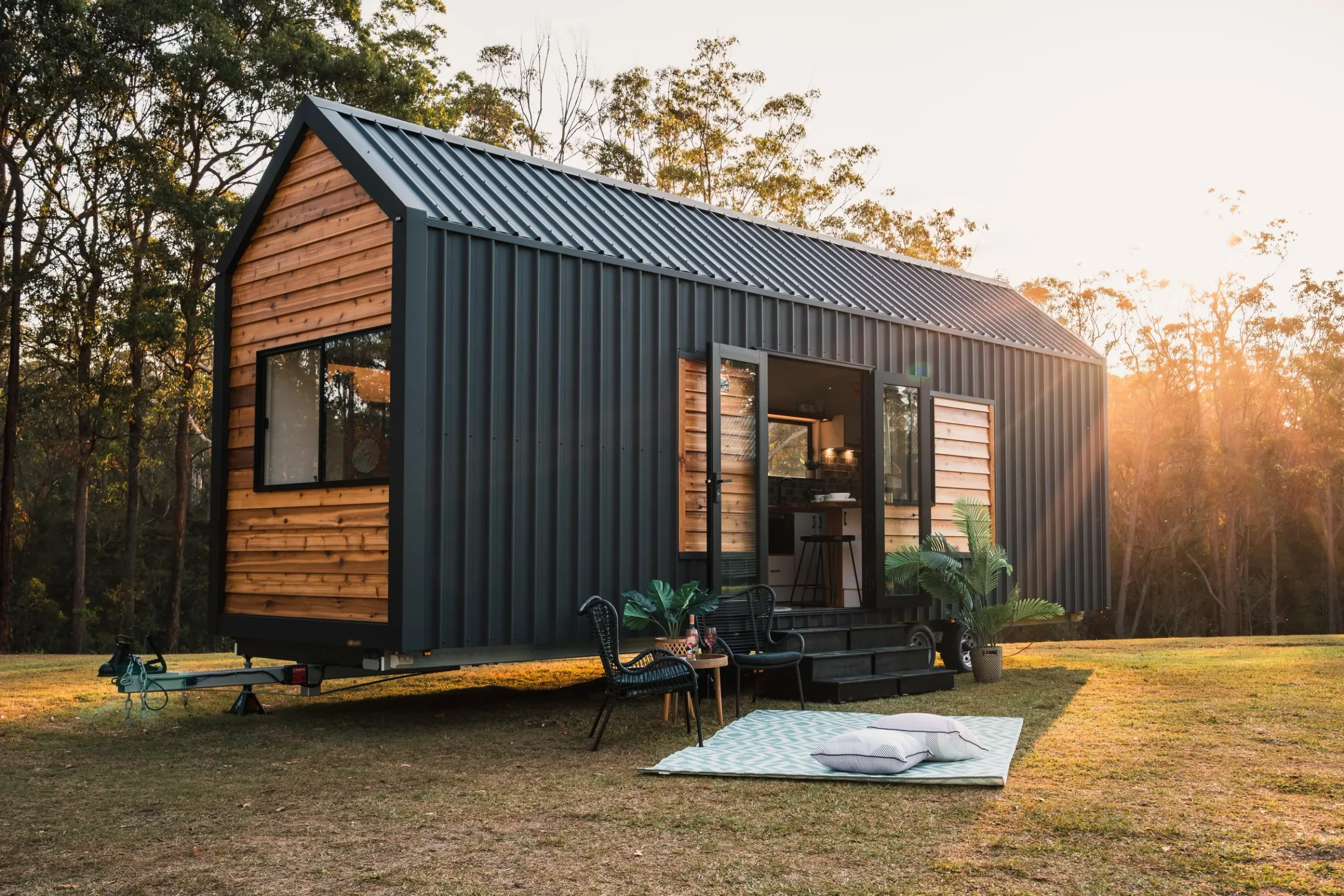
A tiny home is a small, very compactly planned living space. In Lithuanian, this term can be understood as a “small house” or “compact house,” although the English term is also commonly used.
The main idea of a tiny home is to have a smaller living space where every area is planned very practically. This type of housing can be used for leisure, permanent living, or as additional space, but its specific use depends on the project, level of finishing, and local requirements.
How Is a Tiny Home Different from a Regular House?
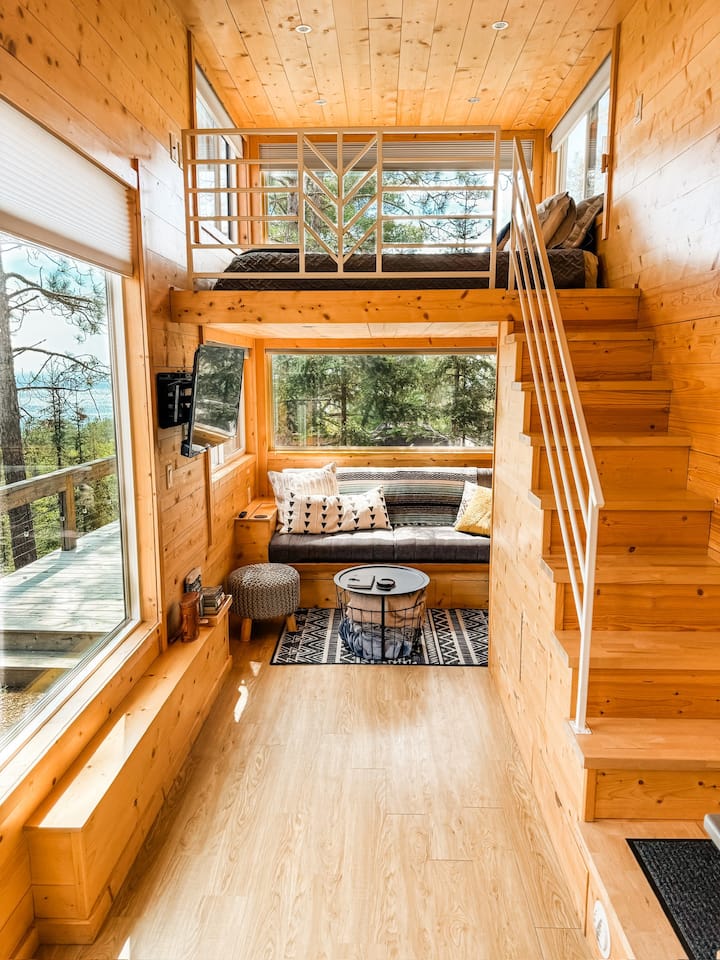
A tiny home is usually smaller than a regular residential house. Because of this, not only the size matters, but also the layout. The kitchen, sleeping area, bathroom, storage, and relaxation space need to be planned in advance.
In a regular house, it is possible to have more separate rooms and open space. In a tiny home, the focus is usually on solutions that allow one area to serve several functions. For example, a sofa can be used as both a place to relax and an additional sleeping area, while stairs or benches can include storage space.
Is a Tiny Home Always on Wheels?
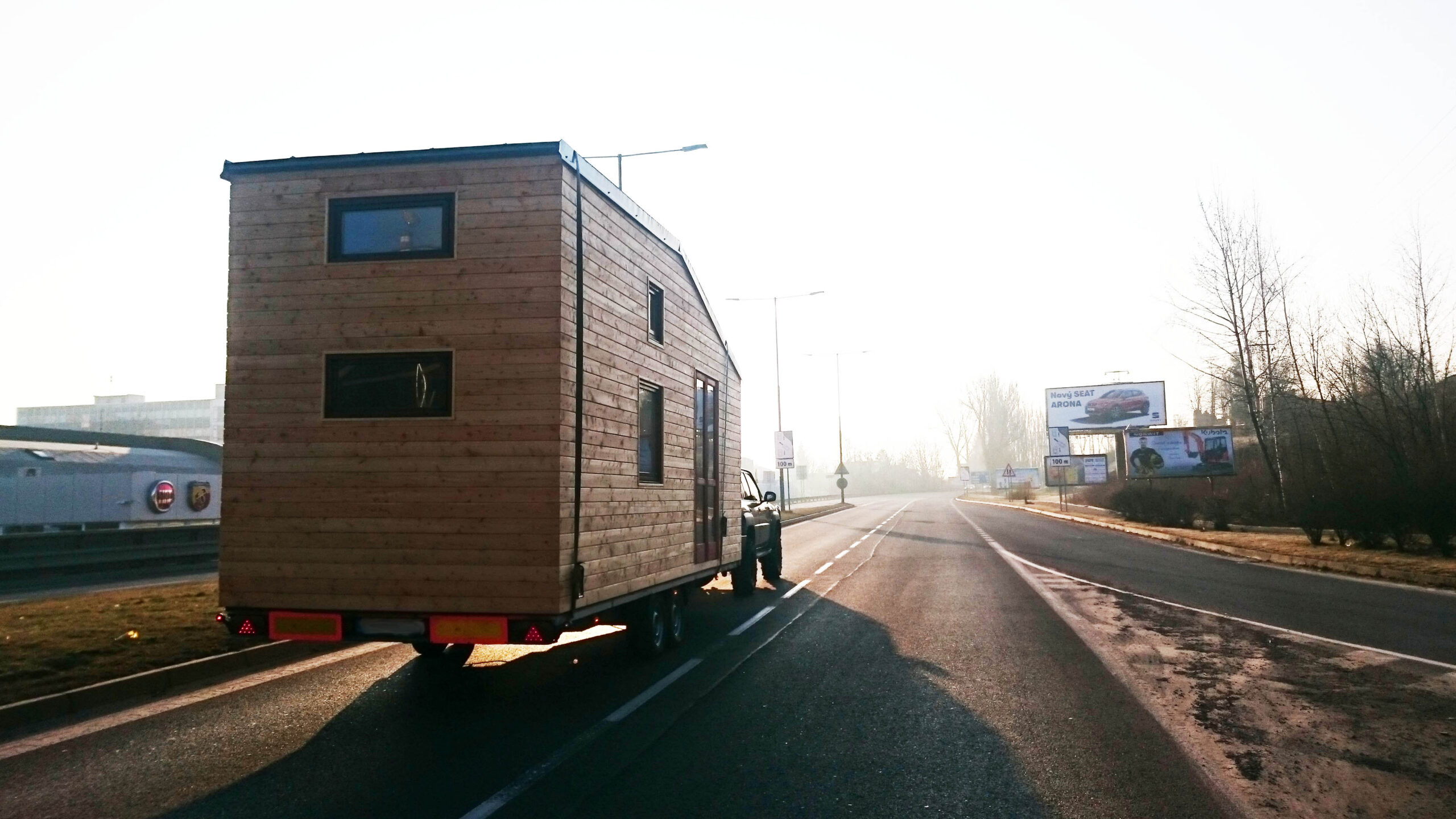
Not always. Some tiny homes can be mobile, while others are built as stationary buildings. This depends on the manufacturer, construction type, project, and the buyer’s needs.
That is why, when choosing, it is important not to rely only on a photo or the name. The buyer should clearly find out whether the specific tiny home is designed to be transported, whether it needs to be installed on a specific plot, whether it requires foundations, and what work must be completed before use.
Is a Tiny Home Suitable for Year-Round Living?
This depends on the specific model and its scope of delivery. Some tiny homes may be intended for seasonal use, while others may be prepared for year-round living.
The buyer should ask the manufacturer about insulation, windows, heating, ventilation, water, and wastewater solutions. The fact that a building is called a tiny home does not automatically mean that it is suitable for permanent living.
If the plan is to live in it all year round, it is important to evaluate not only the interior, but also the technical solutions. For comfortable everyday use, it matters how the home will perform in winter, how heat will be maintained, and how the required systems will be connected.

What Should You Pay Attention to When Choosing a Tiny Home?
First, it is worth clearly understanding what the home is being purchased for. Will it be a holiday cabin? An additional building on a plot? Or a house intended for permanent living? The required scope of delivery depends on the answer.
It is also important to evaluate the plot, access, foundations, utilities, and installation conditions. Even a small home must be properly placed or prepared for use.
When comparing offers, it is worth asking what is included: the structure, interior finishing, furniture, household appliances, transportation, installation, heating, or other solutions. Different manufacturers may define the scope of delivery very differently.
On the PrefabFind platform, it is useful for buyers to compare tiny home manufacturers based on clearly presented information: housing type, intended use, level of finishing, delivery options, and additional services.
Who Can a Tiny Home Be Suitable For?
A tiny home can be suitable for someone who wants a smaller, easier-to-maintain home and can live with fewer belongings. It can also be considered as a leisure space, guest house, or compact home in nature.
However, this solution is not suitable for everyone. A small space requires more discipline, clear planning, and a realistic view of everyday needs. Before buying, it is worth evaluating whether a home of this size truly matches the buyer’s lifestyle.
Conclusion
A tiny home is a compact living space where the most important factor is not size, but practical planning. It can be used for different purposes, but each offer should be evaluated separately.
When choosing a tiny home, it is important to clarify its intended use, scope of delivery, insulation, utilities, transportation, installation, and any work not included in the offer. The clearer the answers are before buying, the easier it is to make a calm and practical decision.