Learn what a panelized house is, how it is manufactured, how it differs from other house types, and what is important to consider when choosing one in Lithuania.
A panelized house is a house whose main wall, floor, or roof sections are manufactured in advance in a factory. These sections are called panels. They are later transported to the plot and installed on prepared foundations.
For a regular buyer, the most important thing to understand is that a panelized house is not one specific house style. It is a construction method. The house may look modern, traditional, or very simple, but its structural parts are prepared in a factory and assembled on the construction site.
How is a panelized house manufactured?
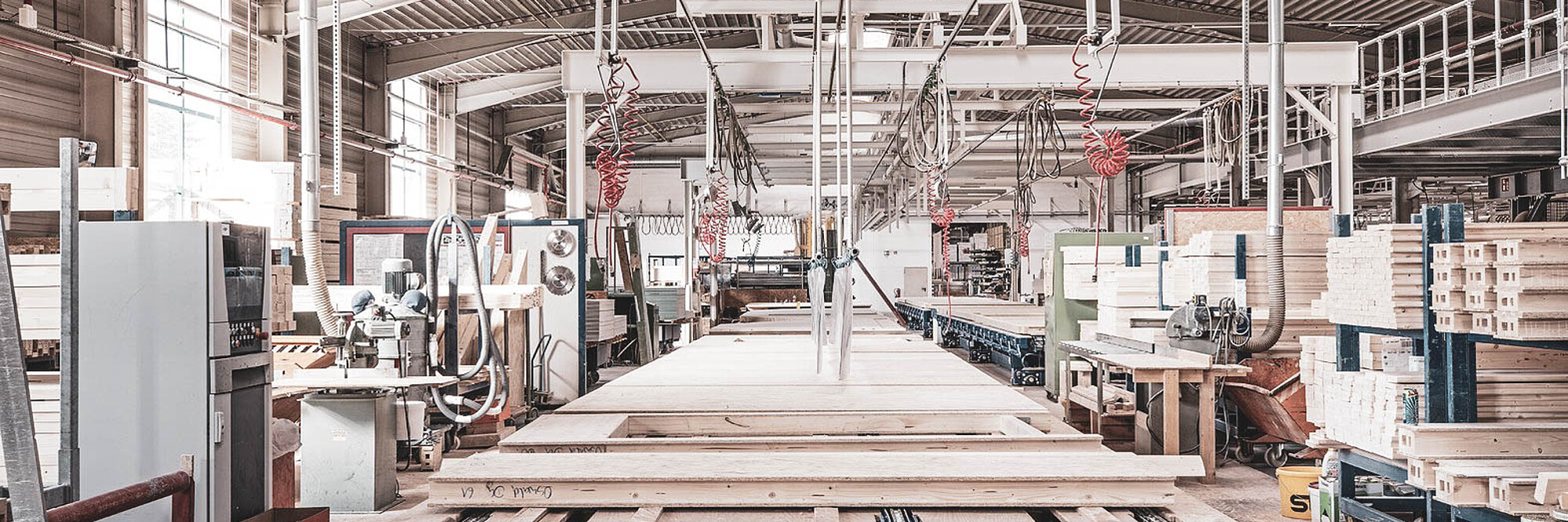
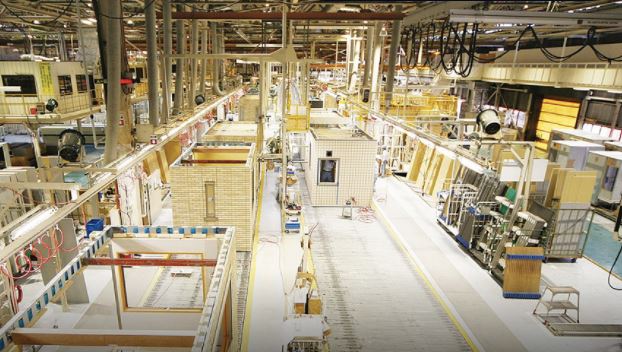
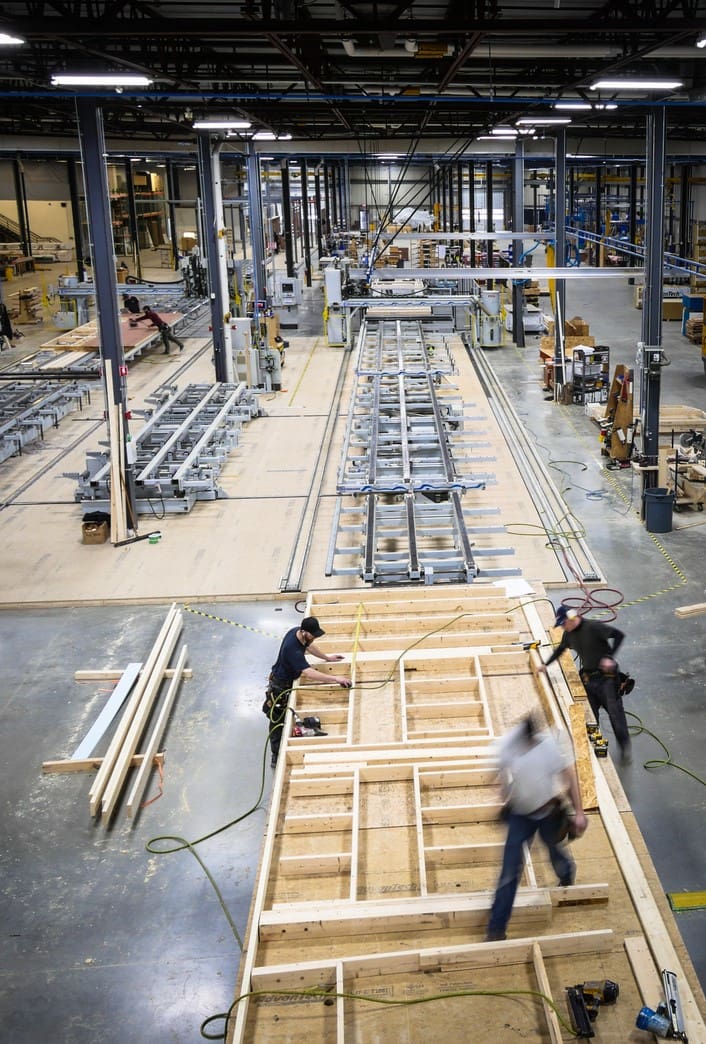
The process of building a panelized house usually begins with a project. Based on that project, the house panels are prepared in a factory. A panel is a larger structural part, for example, a section of a wall with certain layers.
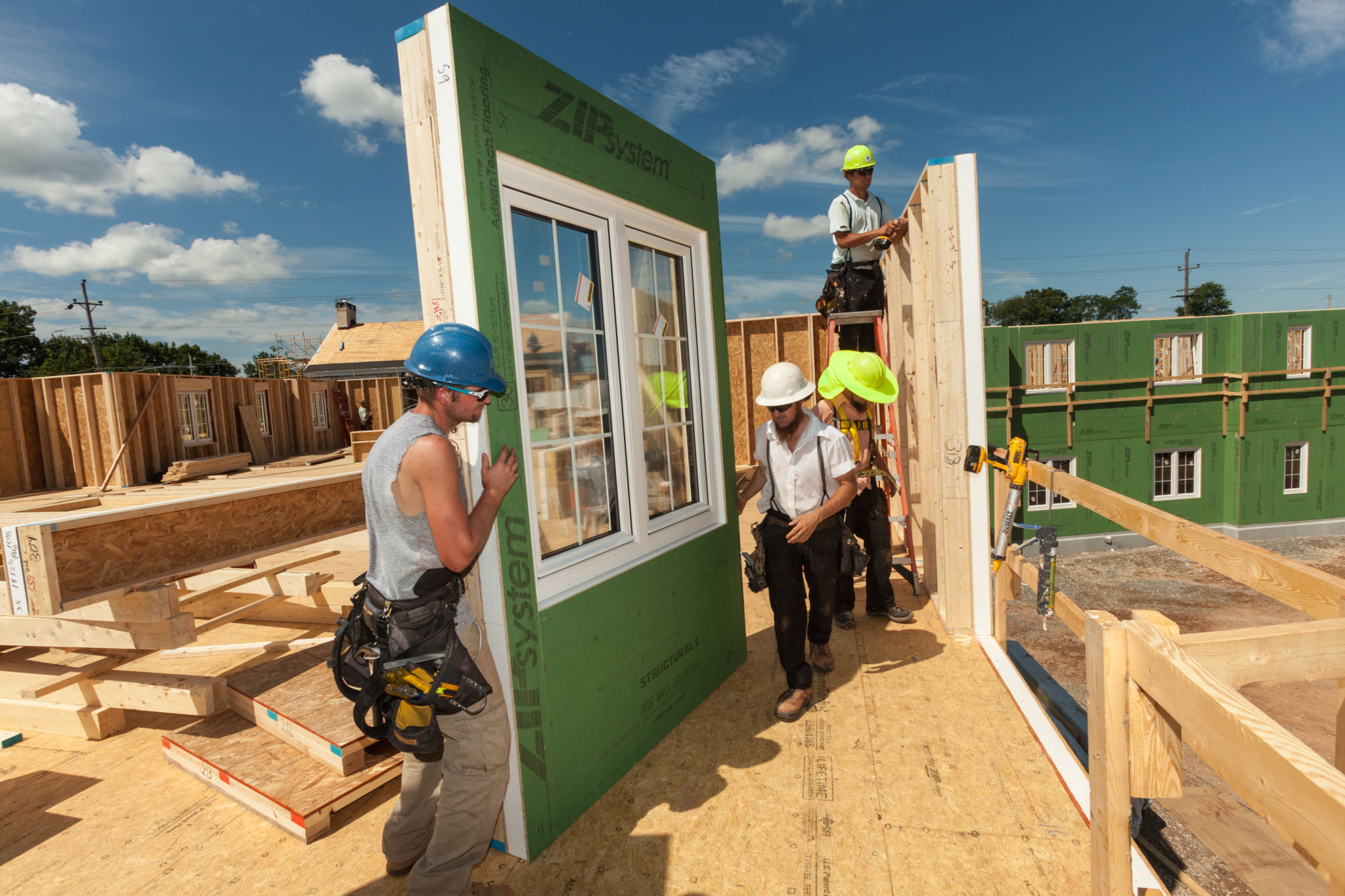
Once the panels are prepared, they are transported to the plot. On the construction site, they are lifted and connected to each other. Further work is then carried out: roofing, window installation, façade work, interior finishing, engineering systems, or other works, depending on the selected level of completion.
The exact amount of work depends on the manufacturer and on the level of completion chosen by the buyer.
How is a panelized house different from a modular house?
Both a panelized house and a modular house can be manufactured in a factory, but the principle is different.
A panelized house is made from flat structural parts — panels. These are usually transported to the plot, where the structure of the house is assembled from them.
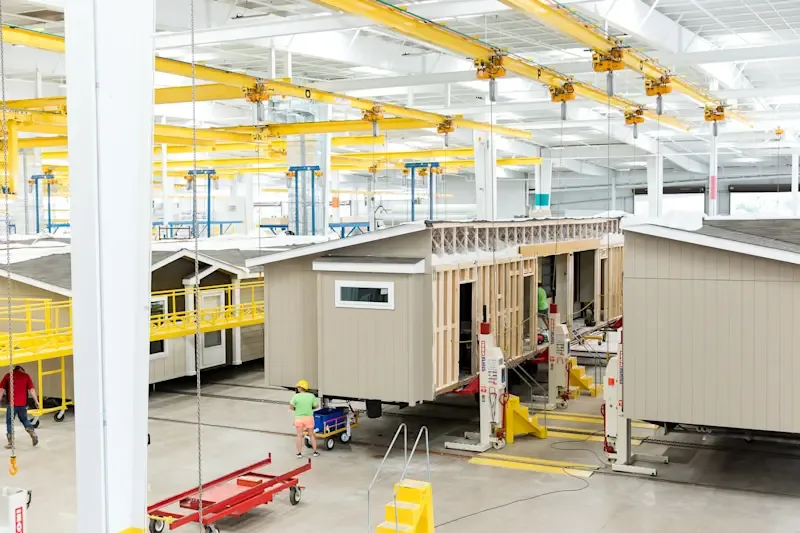
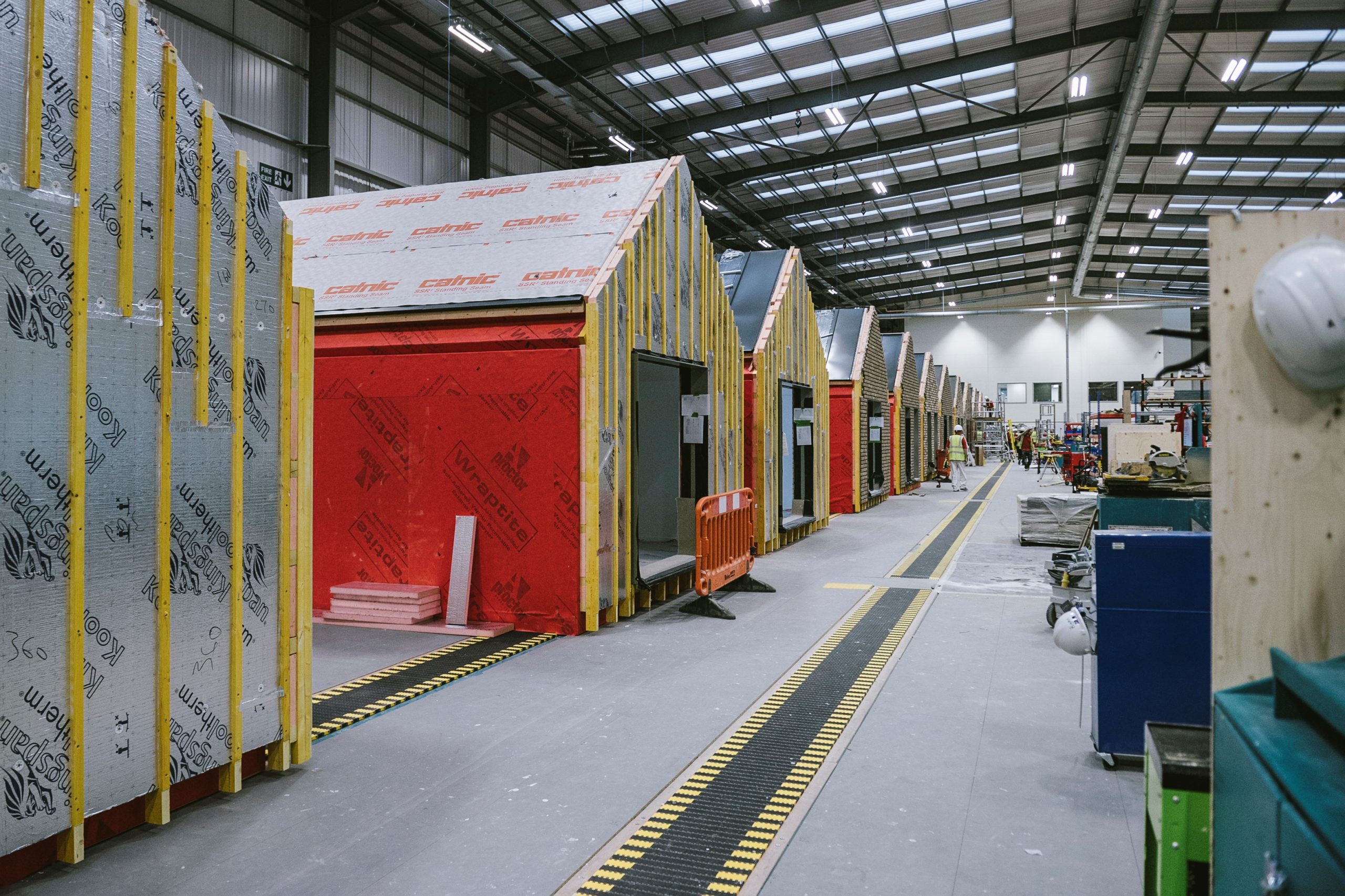
A modular house can also be made from panels, but the main difference is that, in the factory, the panels are joined into larger three-dimensional sections — modules. In other words, instead of separate wall sections being transported to the plot, a pre-formed part of the house is delivered, for example, a room or a block of several rooms.
As a result, a modular house usually has more work completed in the factory, while on the plot the modules are placed on prepared foundations and connected to each other.
What does the level of completion mean?
The level of completion means what exactly is included in the manufacturer’s offer. One panelized house may be offered only as a structure. Another may include more completed work, such as windows, the façade, partial interior finishing, or full interior finishing.
For this reason, when comparing offers, buyers should not look only at the starting price or an attractive visualization. It is important to understand what is included, what is not included, and what work will remain for the buyer after installation.
This is especially important because different manufacturers may define the same terms differently. For example, “partial finishing” in one offer may include more work than in another.
What should you pay attention to when choosing a panelized house?
First, it is worth clarifying which works are included in the offer. Does the manufacturer include design work? Is transportation included? Is installation included? Is it clear which works are carried out in the factory and which are carried out on the plot?
It is also important to assess the foundations, access to the plot, utility connections, and site preparation. Even if the house itself is manufactured in advance, the plot still needs to be properly prepared.
On the PrefabFind platform, buyers can compare different manufacturers and the information they provide: house type, level of completion, materials, delivery options, and additional services.
Is a panelized house suitable for every buyer?
A panelized house can be a good choice for someone who wants a clearer manufacturing and installation process. However, this does not mean that the same solution will suit everyone.
The specific plot, selected project, manufacturer’s experience, level of completion, and final works all need to be evaluated. If the buyer wants to change many details of the project, it is important to discuss in advance how much flexibility the manufacturer can offer.
Conclusion
A panelized house is a house whose main structural parts are manufactured in a factory as panels and later installed on the plot. It is not a house style, but a construction method.
When choosing this type of house, the most important things are to understand the level of completion, the installation process, and the works that are not included in the initial offer. The more clearly you compare manufacturers’ conditions, the easier it will be to make a rational decision.