A mobile home is a type of housing designed so that it can be transported from one place to another. In simple terms, it is not a regular house that is built from start to finish on a plot. A large part of it is prepared in advance, and later the home is delivered to the chosen location.
It is important to understand that “mobile home” can refer to different solutions. Some mobile homes may be more similar to holiday accommodation, while others may resemble a small residential home. That is why buyers should evaluate not only the name, but also the specific model, its intended use, scope of delivery, and conditions of use.
How Is a Mobile Home Different from a Regular House?
A regular house is usually built on a specific plot and is not planned as an object that can be easily moved. A mobile home, on the other hand, is designed with the idea that it can be delivered to a location already prepared, or almost prepared, for use.
This does not mean that a mobile home can always be moved easily at any time without preparation. Transportation still depends on the size of the home, its construction, access to the plot, and installation conditions. Some mobile homes can be moved more easily, while others require more planning.

Is a Mobile Home Always on Wheels?
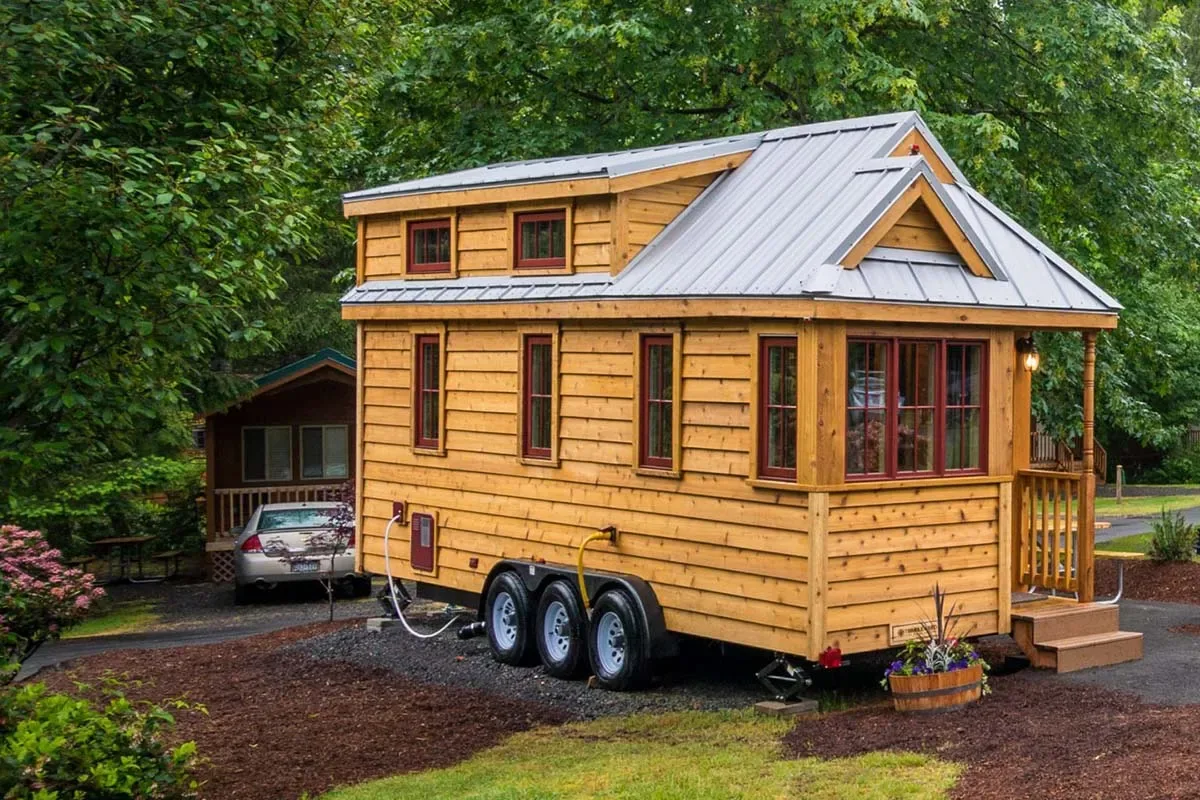
Not always. Some mobile homes may be on wheels or have a structure adapted for transportation. Others may be delivered by special transport and placed in a prepared location.
That is why, when choosing, it is important to ask the manufacturer clearly how the specific home is transported, whether it is intended for frequent relocation, or whether it is mainly designed for one-time delivery to a plot. This helps avoid the mistaken impression that every mobile home works like a trailer or camper.
What Can a Mobile Home Be Used For?
A mobile home can be considered as holiday accommodation, a guest house, additional space on a plot, or a compact home. The specific use depends on the home’s level of finishing, insulation, utilities, and site conditions.
If the home is planned to be used all year round, heating, insulation, ventilation, water, and wastewater solutions should be evaluated in advance. The fact that a home is mobile does not automatically mean that it is suitable for permanent living.
What Should You Pay Attention to When Choosing a Mobile Home?
First, it is worth finding out what is included in the offer. Is the home sold with interior finishing? Is transportation included? Does the manufacturer help with installation? Will foundations, supports, or other preparation work need to be arranged separately?
It is also important to evaluate the plot. The buyer needs to understand whether there is suitable access, whether there is enough space for delivery, and how electricity, water, and wastewater will be connected. A smaller home does not mean that no preparation is needed.
On the PrefabFind platform, it is useful for buyers to compare mobile homes by intended use, scope of delivery, transportation options, materials, and additional services — not only by photos.
How Is a Mobile Home Different from a Tiny Home?
A mobile home and a tiny home can look similar, but these terms do not describe exactly the same thing. A tiny home usually emphasizes a small, compactly planned living space. A mobile home emphasizes the possibility of transporting or relocating the home.
In some cases, the same home can be both a tiny home and mobile. However, for the buyer, the most important thing is still to look at the specific manufacturer’s offer: how the home is made, how it is transported, and what type of use it is intended for.

Conclusion
A mobile home is housing adapted for transportation, which can be used for different purposes: leisure, additional space, or, if properly prepared, everyday living.
When choosing, it is important not to rely only on the name. Buyers should clearly understand whether the home is intended for seasonal or permanent use, how it is transported, what is included in the scope of delivery, and what work will be needed on the plot. The clearer the answers are before buying, the easier it is to make a practical decision.